
Views: 0 Author: Site Editor Publish Time: 2026-07-01 Origin: Site


Packaging failures carry hidden costs that cascade through the supply chain. Transit damage, collapsed pallets, and poor print registration often stem directly from incorrect substrate selection. When you choose the wrong board, you risk compromising structural integrity and high-fidelity print quality. High-volume commercial packaging runs demand a precise balance between performance and unit cost. Relying solely on basic weight metrics is no longer sufficient for modern automated conversion lines. You must evaluate specific technical specifications, including surface smoothness, machine-direction stiffness, and internal ply bond strength. Understanding these mechanical properties allows you to specify the exact board grade required for your specific application. This approach prevents costly downtime on the folding-gluing line and ensures the final carton withstands the rigors of global distribution. By shifting focus from generic categories to precise technical tolerances, packaging engineers can eliminate production bottlenecks and protect the product from the factory floor to the retail shelf.
Match GSM and caliper (thickness) to the specific load-bearing requirements of the product to prevent transit failure and stacking collapse.
Evaluate top-coat smoothness (target >200 seconds) and gloss (35–60 GU) to ensure uniform ink coverage and optimal brand presentation.
Choose between grey back duplex board and white back based strictly on internal packaging aesthetics, hygiene requirements, and unit budget constraints.
Distinguish between carton board variants like duplex board and folding box board (FBB) to optimize the structural-to-cost ratio.
Assess moisture content and ply bond strength to mitigate implementation risks like cracking and delamination during automated carton board conversion.
Defining the primary function of the packaging dictates your substrate selection. You have to weigh transit protection against retail shelf appeal. Load-bearing requirements and stacking strength determine the necessary structural properties of the board. Packaging engineers rely on the Box Compression Test (BCT) and Ring Crush Test (RCT) to gather vital data for logistics planning. These metrics indicate how well a carton will hold up under the weight of multiple pallets.
Surviving long-haul ocean shipping and multi-tier warehousing demands a robust structural design. The packaging must protect contents from impact, continuous vibration, and sustained compression forces. When a container ships across the globe, it faces extreme humidity shifts and rough handling. If the board lacks sufficient stiffness, the bottom tiers of a pallet will buckle, leading to product damage and rejected shipments.
Aesthetic demands also play a major role in material selection. Retail environments require high-resolution graphics and vibrant colors to attract consumers. The top surface of the board must accept ink uniformly without mottling or excessive absorption. Balancing these visual requirements with the need for physical strength is the core challenge in packaging design.
High-speed automated packaging lines impose strict demands on substrate performance. Consistent caliper and precise moisture content tolerances prevent machine jams and maintain throughput efficiency. If the board thickness varies even slightly across a single roll, it can throw off the entire die-cutting process. Operators need materials that behave predictably at speeds exceeding thousands of cartons per hour.
Gluing compatibility, die-cutting precision, and foldability determine how well the board runs on the line. The material must withstand high-speed folding-gluing operations without the top liner cracking. When the liner cracks, it exposes the raw fibers underneath, ruining the visual appeal and weakening the fold. Proper scoring matrices and correct grain direction alignment are necessary to achieve clean, durable folds.
Dust generation during die-cutting is another machinability factor. Boards with poor internal bonding release excessive dust, which clogs sensors and contaminates the printing units. Specifying a board with high internal bond strength minimizes this issue, reducing maintenance downtime and ensuring cleaner production runs.
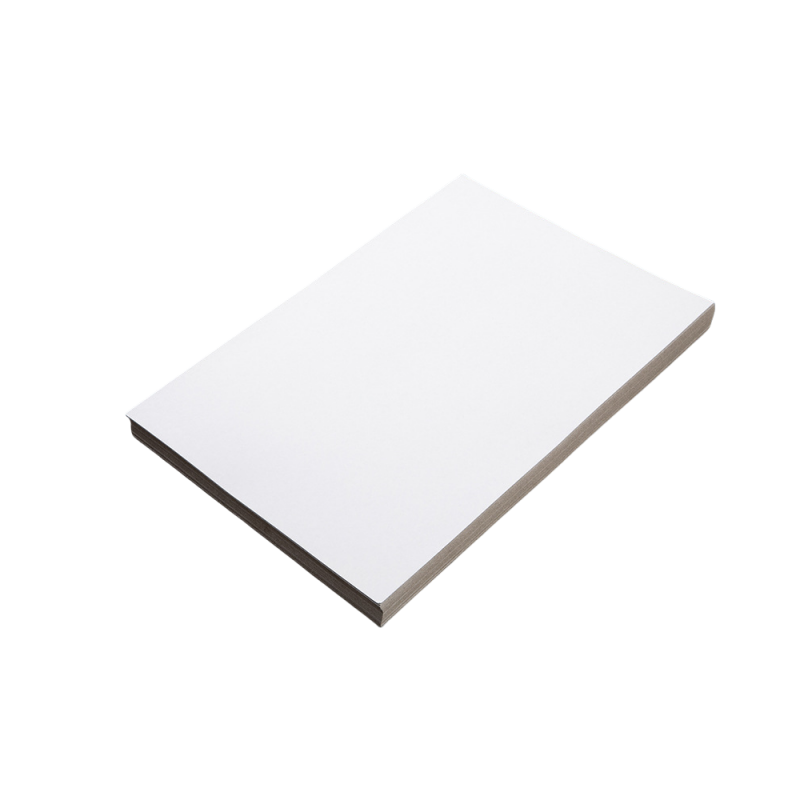
The standard grey back duplex board features a multi-ply structure. It utilizes recycled pulp for the base layers and a fully coated, bleached top layer. This specific composition offers a highly practical balance of mechanical performance and material economy. Manufacturers rely on it heavily for high-volume runs where internal appearance does not impact the consumer experience.
Best use cases include secondary packaging, fast-moving consumer goods (FMCG) cartons, household dry goods, and industrial hardware boxes. In these applications, the internal aesthetics remain secondary to structural protection. The cost-to-performance ratio provides significant advantages, allowing brands to optimize yield in large-scale production environments.
Secondary packaging for bulk retail displays.
Dry food cartons where the product sits inside a primary sealed bag.
Automotive aftermarket parts packaging.
Hardware and tool boxes requiring high burst strength.
White back variants utilize higher-grade recycled or virgin pulp base layers. This manufacturing choice achieves a cleaner, premium white internal appearance. Brands specify this grade for applications requiring enhanced presentation upon unboxing. The clean interior signals quality and attention to detail to the end consumer.
You will typically see this specified for premium FMCG, pharmaceuticals, cosmetics, and consumer electronics. In these specific sectors, internal presentation significantly influences the perceived value of the product. While it costs more than the grey back alternative, the investment pays off in brand positioning and customer satisfaction.
The one side coated duplex board serves as the undisputed industry standard for offset, flexo, and gravure printing. The coated surface provides the necessary smoothness and ink holdout for high-quality graphics. Without this coating, the porous raw fibers would absorb too much ink, resulting in dull, washed-out images.
Evaluating the coating formulation is necessary to optimize print results. Coatings typically include clay, kaolin, or calcium carbonate. These minerals improve ink holdout, reduce drying time, and ensure sharp dot reproduction. Uncoated boards simply lack the surface properties required for demanding, high-resolution print applications.
Structural and composition differences define the choice between these two substrates. The standard duplex board relies heavily on recycled fibers. In contrast, Folding Box Board (FBB) utilizes mechanical and chemical virgin pulp. This fundamental difference in raw materials dictates their respective stiffness, bulk, and price points.
Specifying a standard packaging duplex board over FBB achieves significant material savings. You can do this without sacrificing top-surface print quality. For cost-sensitive, high-volume applications where extreme virgin-fiber stiffness is not strictly required, the recycled multi-ply option remains the most logical engineering choice.
Mapping standard GSM ranges to specific applications ensures optimal performance on the shelf and in transit. Selecting the wrong weight leads to either structural failure or wasted material spend. You must align the board's physical mass with the product's weight and the carton's dimensions.
GSM Range | Common Applications | Structural Characteristics |
|---|---|---|
200–250 GSM | Lightweight retail boxes, pharmaceutical unit cartons, hanging display cards. | High foldability, low load-bearing capacity, excellent for small intricate die-cuts. |
270–310 GSM | Standard FMCG food packaging, toy boxes, hardware items. | Balanced stiffness and printability, suitable for automated high-speed cartoning. |
350–450+ GSM | Household appliances, bulk shipping containers, protective backing cards. | Maximum rigidity, high puncture resistance, requires heavy-duty scoring matrices. |
Analyzing the non-linear relationship between GSM, bulk, and stiffness is a critical engineering step. Higher GSM does not always equate to proportionally higher stiffness. The board's specific multi-ply composition, fiber orientation, and manufacturing pressing process heavily influence the final rigidity. You must test the actual caliper and stiffness ratings rather than relying on GSM alone.
Targeting smoothness over 200 seconds on the Bekk smoothness test is necessary for high-resolution print fidelity. A smooth surface ensures uniform ink transfer from the blanket to the board. It prevents mottling and allows for sharp halftone dot replication. Rough surfaces scatter light and absorb ink unevenly, degrading the final image quality.
Optimizing gloss levels within the 35–60 GU range prevents harsh glare under retail lighting. This specific range maintains color vibrancy while supporting high-speed barcode readability. Excessively high gloss can cause scanning errors at the checkout counter. Furthermore, this mid-range gloss ensures compatibility with various post-print varnish and lamination applications.
Evaluating Machine Direction (MD) versus Cross Direction (CD) stiffness ratios is essential for structural design. The paper fibers align parallel to the machine direction during manufacturing, making the board stiffer in that orientation. Proper orientation of the carton blank on the sheet maximizes load-bearing capacity and prevents carton bulge on the shelf.
High ply bond strength, also known as internal bond strength, prevents delamination. During complex die-cutting, high-speed folding, and scoring operations, the internal layers face immense shear stress. Insufficient ply bond leads to the layers separating, which causes structural failure, jams the conversion equipment, and results in massive production delays.
Establishing a framework for material downgrading protects packaging margins. You must decide when to switch to a recycled back board without sacrificing external print quality. This decision hinges entirely on the importance of internal aesthetics to the end-user. If the consumer discards the box immediately, paying for a premium white interior wastes budget.
Yield calculations are critical for procurement teams. Evaluating cost per ton versus cost per thousand finished cartons provides an accurate assessment of material efficiency. Boards with higher bulk can achieve the required stiffness at a lower GSM. This means you get more carton blanks per ton of material, driving down the unit cost significantly.
Managing shipping hazards requires selecting robust caliper specifications. The packaging must withstand humidity fluctuations, continuous vibration, and stacking pressure during international transit. Ocean freight exposes cartons to extreme moisture, which weakens recycled fibers. You must specify boards with adequate sizing to resist moisture penetration.
Supplier lead times and material consistency across global sourcing partners must be carefully managed. A board produced in one mill may behave differently than a board from another, even if the spec sheets look identical. You must establish strict Service Level Agreements (SLAs) regarding moisture content, caliper variation, and surface smoothness to ensure uninterrupted production schedules.
Evaluating recycled content percentages aligns substrate selection with corporate sustainability mandates. Utilizing boards with high post-consumer waste (PCW) reduces the environmental footprint of the packaging. You should also verify FSC or PEFC chain-of-custody certifications to ensure responsible forestry practices for the virgin pulp top layers.
Navigating global sourcing compliance is mandatory for consumer packaging entering international markets. You must ensure the board meets REACH, RoHS, and heavy metal restrictions. Failure to comply with these regulations results in shipments being seized at customs and severe damage to the brand's reputation.
Cracking on the fold ruins the structural integrity and visual appeal of the carton. Root causes include low moisture content, poor fiber orientation, or improper scoring matrices on the conversion line. When the board is too dry, the fibers become brittle and snap under the pressure of the folding blade.
Mitigation involves specifying strict moisture levels, typically between 6% and 8%. You must conduct pre-production fold tests using actual production tooling. Ensure the main folds align with the machine direction (MD) of the board, as folding against the grain significantly increases the risk of liner cracking.
Warping and curling disrupt automated conversion processes, causing misfeeds and machine jams. These issues stem from asymmetrical moisture absorption, an unbalanced top coating, or poor warehousing conditions. If one side of the board absorbs moisture faster than the other, the sheet will curl toward the dry side.
Mandating climate-controlled storage is the first line of defense. You should specify dimensional stability tolerances in the supplier SLA. Utilizing vapor-barrier wrapping for transport and keeping the pallets wrapped until immediately before printing mitigates moisture-induced warping.
Inconsistent coating porosity causes ink mottling and drying issues. Binder migration on the coated surface can also prevent ink from setting properly. This degrades print quality, causes offsetting in the delivery pile, and slows down the entire production run.
Requesting proofing samples is a mandatory step. You must test ink tack, absorption rates, and drying times on the specific board lot before initiating full-scale printing runs. Adjusting the ink formulation or the press speed based on these tests prevents costly errors and rejected lots.
Request comprehensive Technical Data Sheets (TDS) from suppliers to verify exact caliper, stiffness, and moisture specifications before procurement.
Order unprinted sample sheets to create CAD dummies, allowing you to physically test the structural design and load-bearing capacity.
Conduct limited trial runs on your specific automated folding-gluing lines to validate machinability and scoring matrix compatibility.
Audit your current packaging portfolio to identify opportunities where switching to a recycled-back substrate can reduce unit costs.
A: Grey back utilizes recycled pulp for the base layers, offering a highly cost-effective solution for applications where internal aesthetics are secondary. White back uses higher-grade recycled or virgin pulp to achieve a premium white internal appearance, making it suitable for luxury goods, pharmaceuticals, and high-end cosmetics.
A: Determine the load-bearing requirements and the physical weight of the product. Use 200–250 GSM for lightweight retail items, 270–310 GSM for standard FMCG cartons, and 350–450+ GSM for heavy-duty applications. Always consult with structural designers to match the GSM to the required machine-direction stiffness.
A: Duplex board is primarily composed of multi-ply recycled fibers, making it significantly more cost-effective for high-volume runs. FBB utilizes mechanical and chemical virgin pulp throughout its layers, providing higher stiffness, lower bulk, and a premium feel, but at a substantially higher price point.
A: Cracking is almost always caused by low moisture content, incorrect grain direction alignment, or improper scoring matrices. Prevent it by specifying a strict 6–8% moisture content from the mill, aligning primary folds with the machine direction, and optimizing the scoring rules during the die-cutting process.
A: For high-resolution offset printing, you should target a Bekk smoothness of over 200 seconds and a gloss level between 35 and 60 GU. This specific range ensures uniform ink coverage, sharp halftone dot reproduction, and prevents harsh glare under retail lighting.
A: Standard recycled boards are generally not suitable for direct food contact due to potential contaminants in the recycled pulp. Specific food-grade boards manufactured with appropriate barrier coatings, virgin fibers, and strict hygiene certifications are required for direct contact applications.
A: High ply bond strength prevents the internal layers of the board from separating during the immense shear stress of die-cutting, scoring, and high-speed folding-gluing operations. Strong internal bonding ensures structural integrity and prevents excessive dust generation on the conversion line.


