
Views: 0 Author: Site Editor Publish Time: 2026-08-12 Origin: Site


Sourcing raw materials for drywall manufacturing requires strict adherence to exact specifications. Large-scale construction projects demand flawless materials from day one. Substandard facing paper directly causes board delamination and production delays. It also triggers massive compliance failures across your product line. Evaluating gypsum board paper quality goes far beyond simply checking the basis weight. Buyers must rigorously verify how suppliers utilize standardized testing methodologies in their labs.
Doing so ensures long-term structural integrity and chemical compatibility. It guarantees the paper bonds perfectly to the inner gypsum core. It also ensures environmental resistance under harsh, real-world conditions. This guide outlines the critical laboratory tests you need. It highlights the exact performance metrics procurement teams must demand. It details the essential documentation required before you approve any new supplier. You will learn how to navigate complex tensile strength requirements. You will understand how to balance paper porosity. Finally, we will cover specialized tests for moisture and fire resistance.
Core structural metrics—like tensile strength, porosity, and Cobb value—must align with specific manufacturing line speeds and drying temperatures.
Specifications for Gypsum Liner Face and Gypsum Liner Back differ significantly; buyers must evaluate each based on its distinct functional requirements.
Validating a Waterproof Gypsum Liner or Fireproof Gypsum Liner requires documented compliance with recognized standards (e.g., ASTM, EN) via third-party or verified in-house Certificate of Analysis (COA).
Reliable procurement hinges on transitioning from sample lab testing to pilot-scale production trials before committing to volume orders.
Poor paper quality severely harms your manufacturing bottom line. It directly drags down daily production efficiency. When you compromise on material standards, factory risks multiply rapidly. For example, poor porosity traps moisture inside the panel. This traps steam and causes core blistering during the high-heat kiln drying process.
Meanwhile, inadequate tensile strength leads to sudden web breaks on the line. Modern production lines run at incredibly high speeds. A single web tear results in expensive, unscheduled downtime. Operators must halt the machinery, clear the ruined materials, and re-thread the master roll. This process wastes valuable hours and destroys profit margins.
The end-user risks are equally severe for your business. Substandard paper leads to panel delamination long after installation. Installers frequently experience poor paint adhesion on the finished wall surface. Panels might also fail regional building codes regarding moisture control. They might fail mandatory fire resistance ratings during inspections. Such failures severely damage your brand reputation. They invite costly material returns and potential legal liabilities.
You can avoid these pitfalls by defining strict success criteria upfront. Secure a supplier delivering highly consistent, batch-to-batch quality. They must back their manufacturing claims using verifiable Technical Data Sheets (TDS). Continuous quality assurance (QA) monitoring is also completely non-negotiable. Building a long-term partnership requires radical transparency regarding daily production metrics.
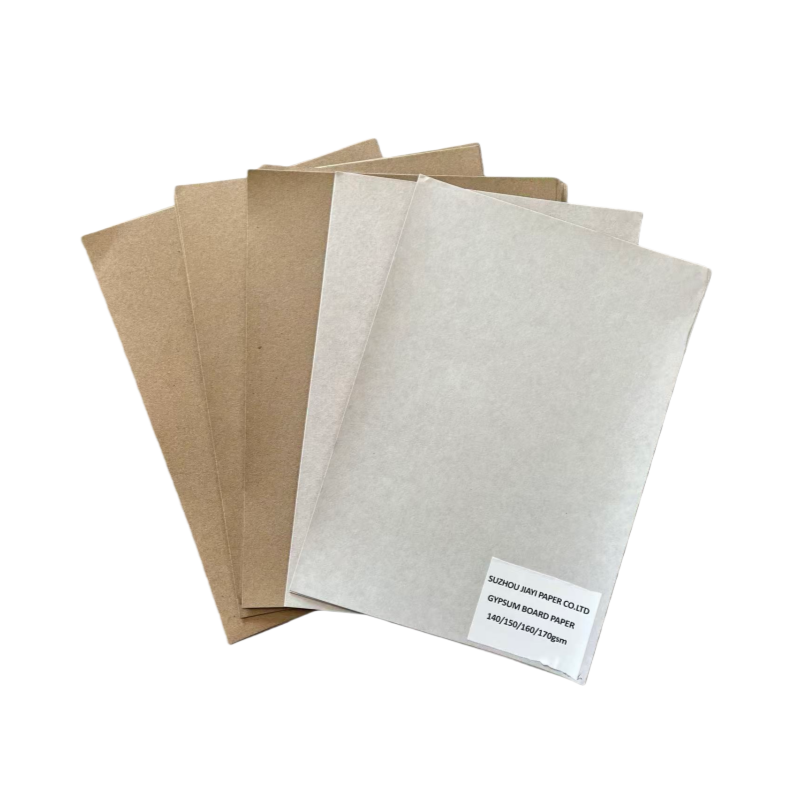
You must understand the different evaluation criteria for your raw materials. Gypsum Liner Face requires a highly smooth, uniform surface. It provides the final aesthetic finish for the drywall panel. This layer ensures excellent paintability for end-users and contractors. Conversely, Gypsum Liner Back features a intentionally rougher texture. This unique texture promotes strong chemical adhesion to the wet core. It handles immense structural tension across the entire board.
Modern factories operate exceptionally fast, continuous production lines. These lines subject the continuous paper web to intense mechanical stress. You must measure tensile strength accurately in two directions. Test the Machine Direction (MD) and the Cross Direction (CD) thoroughly. Fiber alignment during paper manufacturing makes MD naturally stronger. Evaluating MD versus CD metrics is absolutely vital for smooth operations. Buyers must check these exact strength ratios closely. Proper ratios prevent web tearing during the edge-wrapping phase.
Paper porosity directly governs the crucial board drying phase. Manufacturers typically use a Gurley densometer to measure this specific metric. You need a very delicate balance here. The paper must remain porous enough to let internal steam escape. If trapped steam builds up, the board blisters and ruptures. However, the sheet must stay dense enough to block liquid. It must prevent the wet gypsum slurry from bleeding through the surface.
Consistency remains everything in profitable drywall manufacturing. Evaluate weight and thickness tolerances carefully before signing contracts. Industry standards generally allow a maximum variance of ± 3-5%. Significant variance here directly impacts your final board weight. Heavy boards disrupt shipping economics and increase freight costs. Furthermore, inconsistent thickness frustrates installation crews trying to create flat walls.
Parameter | Face Paper Requirements | Back Paper Requirements |
|---|---|---|
Surface Finish | Highly smooth, uniform color | Rougher, optimized for adhesion |
Porosity (Gurley) | Balanced for steam release | Higher porosity for core bonding |
Tensile Strength | High CD strength for edge wrapping | High MD strength for line tension |
Primary Function | Aesthetics and paint adhesion | Structural support and core wrapping |
Standard drywall cannot survive wet or high-heat environments safely. You need specialized paper grades for these demanding applications. Evaluating them requires advanced, highly specific verification methods in the laboratory.
You verify a Waterproof Gypsum Liner primarily through the standardized Cobb Test. Technicians weigh the paper, expose it to water, and reweigh it. This test measures exact water absorption rates over specified times. Standard durations typically include 60 seconds and full 2-hour exposures. Buyers should demand strict, exceptionally low-absorption thresholds. High absorption means the finished board will swell and degrade rapidly.
Furthermore, closely check the hydrophobic additives used during paper production. Mills often use chemical sizing agents like Alkyl Ketene Dimer (AKD). Some mills utilize traditional rosin sizing instead. Verify their chemical compatibility against your specific factory stucco formulation. Incompatible sizing agents can destroy core adhesion entirely.
Life safety codes demand rigorous, uncompromising fire testing protocols. Validating a Fireproof Gypsum Liner requires assessing overall combustibility and flame spread. The paper matrix significantly contributes to the panel's overall fire rating. It directly dictates how Type X or Type C drywall performs.
Ash content testing serves as another critical verification step. This specific test verifies the presence of non-combustible mineral fillers. These fillers sit deep inside the paper matrix itself. They act as microscopic heat sinks during a fire event. They prevent rapid ignition and slow down flame propagation significantly.
Here are vital elements to watch out for during testing:
Inconsistent sizing application across the full paper roll width.
Failure to meet strict 2-hour Cobb test limits under regional codes.
Missing documentation regarding actual non-combustible filler ratios.
Poor ply bonding leading to premature paper delamination under heat.
You cannot trust supplier marketing claims blindly. You must evaluate the rigorous methodology behind their published data. Checking standard compliance serves as your vital first step. Verify whether the supplier conducts tests according to recognized international standards. Primary governing bodies include TAPPI, ISO, and ASTM. Adherence to these strict frameworks separates professional mills from risky vendors.
Documentation transparency remains equally important during supplier vetting. Buyers must request comprehensive, easily verifiable paperwork. Never settle for a generic, undated Technical Data Sheet. Instead, audit a detailed Certificate of Analysis (COA) for recent batches. This proves the mill actively monitors quality on their production floor. Ensure they test every single master roll before authorizing shipment.
Consider conducting a thorough facility audit in person. Assess the supplier's in-house laboratory equipment directly during your visit. Do they rigorously test for moisture content and ply bond strength? Consistent sizing application across the web is also absolutely critical. Procuring quality Gypsum Board Paper demands strict laboratory oversight at the source.
Be highly alert for common red flags during procurement negotiations. Some suppliers make bold, completely unverifiable material claims. Beware of anyone promising "100% waterproof" material without providing data. They must supply time-bound Cobb test data supporting those exact claims. Another major red flag involves the refusal to share historical reports. Reliable partners always provide historical batch consistency data willingly.
Transitioning to a new raw material supplier carries inherent manufacturing risk. A structured sourcing checklist mitigates this risk effectively and safely. Follow these clear steps to ensure a smooth, profitable transition.
Initial Evaluation: Start your process by requesting physical product samples. Use A4-size sheets for your initial visual and tactile checks. Evaluate the surface smoothness and color consistency. Next, order full master rolls for extensive laboratory testing.
Independent Lab Validation: Never rely entirely on internal supplier testing data. Send the supplier's samples to a neutral third-party laboratory immediately. Specialized pulp and paper testing facilities provide unbiased results. They will verify the provided TDS accurately and objectively.
Pilot Trial Framework: Lab results only tell half the performance story. You must run a limited commercial trial on your own equipment. This lets you observe real-world slurry adhesion and kiln drying behavior. It also highlights how the paper handles mechanical web tension. Monitor the edge-wrapping process closely for any cracking or tearing.
Contractual Safeguards: Formalize your expectations thoroughly before placing volume orders. Establish clear, legally binding Service Level Agreements (SLAs). Define your acceptable defect rates clearly in the contract. Specify maximum allowable moisture content upon warehouse delivery. Finally, outline strict claims processes for handling any rejected rolls.
By implementing this rigorous framework, you protect your manufacturing output. Standardized onboarding prevents costly, unexpected surprises on the factory floor. It ensures your finished drywall panels meet all regulatory requirements consistently.
Assessing gypsum board paper quality remains a complex, multi-dimensional process. It requires hard data rather than optimistic assumptions or guesswork. Procurement teams must verify tensile strength, porosity, and specialized resistance capabilities. Overlooking any single metric jeopardizes your entire production run.
Base your ultimate procurement decisions on transparent, standardized test results. Successful pilot runs offer the best, most reliable proof of performance. Do not make material choices based on upfront cost alone. Substandard paper always creates massive downstream expenses through waste and downtime.
Establish clear, documented quality baselines in your final supplier contracts. Finalize these agreements thoroughly before scaling up to massive volume orders. Implement continuous testing protocols for every inbound shipment you receive. This disciplined approach guarantees a stable, high-quality production environment for years.
A: Face paper prioritizes exceptional smoothness, color consistency, and superior printability. It provides the final aesthetic surface for painting. Conversely, back paper prioritizes high tensile strength, excellent ply bonding, and optimal porosity. These specific traits ensure secure wet slurry adhesion and long-term structural stability.
A: Acceptable Cobb values strictly fall below 15-20 g/m², depending on local building codes. Buyers must validate these figures using time-specific testing, typically over a two-hour duration. Consistent low absorption prevents panel swelling and inner core degradation in damp environments.
A: Porosity dictates the mechanical reality of kiln drying. Low porosity traps steam inside the core, causing the paper to blister. High porosity causes the wet gypsum slurry to bleed through the paper matrix. This ruins the finished board's surface entirely.
A: Primary paper testing standards include TAPPI T410 for basis weight, T414 for tear resistance, and T460 for air permeability. These raw material standards interlock closely with finished board standards, such as ASTM C1396 and ASTM C473, ensuring holistic regulatory compliance.


