
Views: 0 Author: Site Editor Publish Time: 2026-08-14 Origin: Site


Delamination and blistering represent critical vulnerabilities in drywall manufacturing. These severe defects cause major disruptions across production lines. They also ruin the final wall installation for contractors. Poor adhesion directly leads to structural weakness and unacceptable aesthetic flaws. Consequently, bonding failure triggers strict compliance violations. It also massively inflates factory scrap rates, hurting your bottom margins. Why does this happen? The core issue usually traces back to how materials interact under heat. This article provides a comprehensive technical diagnostic framework. We designed it to help plant managers and quality engineers identify root causes of adhesion failure. You will explore the specific mechanics of moisture release and crystal formation. Finally, you will learn how to properly evaluate material properties and implement targeted process solutions to fix these persistent manufacturing errors.
Effective gypsum board paper bonding relies on the precise interaction between the gypsum slurry crystal matrix and paper porosity.
The primary causes of delamination stem from improper calcination temperatures, incorrect starch additive ratios, or suboptimal paper permeability.
Preventing failure requires distinct evaluation criteria for both the Gypsum Liner Face and the Gypsum Liner Back, as their functional requirements differ.
Solving adhesion issues involves a systematic audit of raw material specifications against operational line speeds and drying profiles.
Understanding adhesion requires examining the interface between the wet slurry and the dry paper. When these two elements meet, a complex sequence of physical and chemical reactions begins. You must control these reactions perfectly to achieve a permanent bond.
Successful gypsum board paper bonding relies on deep penetration. The liquid gypsum slurry must enter the tiny gaps between the paper fibers. This action must occur before the hemihydrate sets into solid dihydrate crystals. As the core hardens, microscopic needle-like crystals grow into the paper matrix. They entangle around individual cellulose fibers. Simultaneously, starch additives migrate toward the surface. They form a chemical adhesive layer once heated. This dual mechanism creates an unbreakable mechanical and chemical interlocking bond.
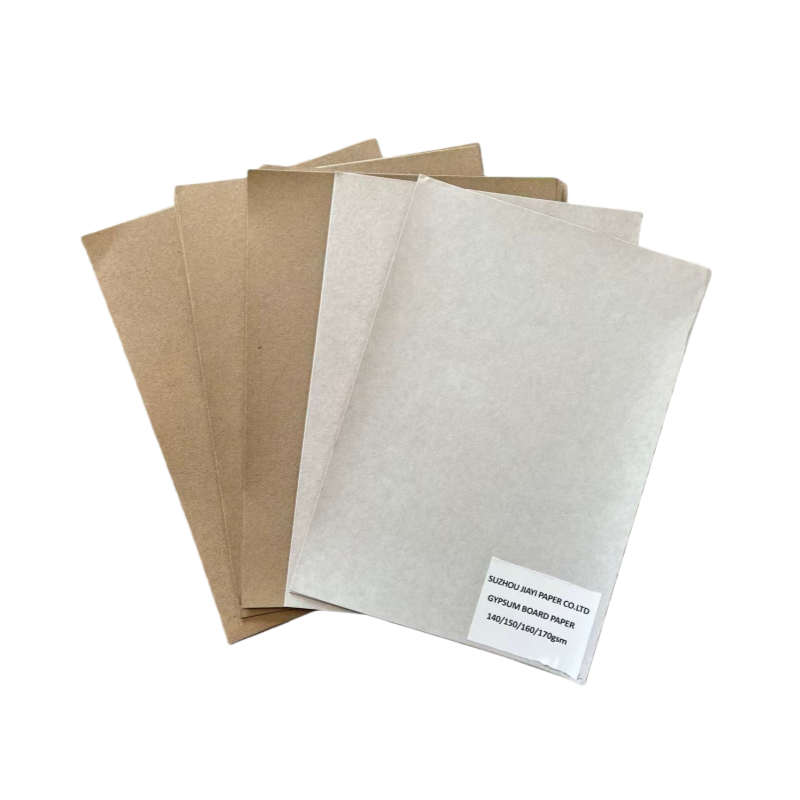
The front layer serves a dual purpose. First, the Face Paper must provide an exceptionally smooth, uniform surface for painting and finishing. Second, it must maintain highly calibrated internal porosity. During the kiln drying phase, intense heat turns internal moisture into steam. This steam must escape through the front layer. If the material lacks sufficient permeability, trapped steam will rupture the bond. This creates large surface bubbles.
The rear layer primarily functions as structural reinforcement. The Backing Paper handles extreme tension. It dictates the final rigidity of the drywall panel. It must absorb a very specific ratio of the wet slurry. If it absorbs too much moisture, the board will warp and curl during drying. If it absorbs too little, the panel loses its tensile strength and becomes brittle.
How do we measure successful adhesion? The industry relies on standardized benchmarks. You should evaluate your products using the following criteria:
DWFC-Aligned Peel Tests: The Drywall Finishing Council outlines specific peel resistance metrics. When peeled, the paper should tear internally (ply separation) rather than detaching cleanly from the core.
Core Cohesion Metrics: The gypsum core must remain intact immediately beneath the paper. A powdery surface beneath the paper indicates a systemic failure.
Humidified Deflection: Panels must resist sagging when exposed to controlled high-humidity environments.
Adhesion failures rarely happen due to a single isolated error. They usually result from compounding variables across the production line. Let us examine the most common culprits.
Kiln calibration is arguably the most sensitive part of drywall manufacturing. Over-drying causes severe calcination. When temperatures spike too high in the final kiln zones, the heat destroys the newly formed dihydrate crystals at the board's surface. They revert to a powdery hemihydrate state. This dead, dusty layer cannot hold the paper fibers. Consequently, the paper easily peels away.
Conversely, under-drying presents its own dangers. When operators run the line too fast, excess moisture remains trapped near the core interface. This trapped water prevents the starch binder from curing properly. It causes latent blistering. These blisters often remain invisible in the factory. They only appear weeks later when contractors apply wet joint compound on site.
The slurry is a delicate chemical ecosystem. Core additives play a massive role in paper adhesion. Common additives include:
Foam: Controls board weight and creates void spaces. Too much foam near the paper interface starves the bond of solid gypsum.
Accelerators: Speed up the setting time. Incorrect dosing leads to premature setting before slurry can penetrate the paper.
Starch: Acts as the primary chemical glue.
Starch gelatinization temperatures are absolutely critical. Starch needs adequate heat and moisture to activate. If the board surface heats up too quickly, the starch cooks before it can form an adhesive boundary. If it stays too cool, the starch remains inert. Both scenarios prevent the chemical bond from forming.
Even a perfectly optimized slurry will fail if the wrapping material is defective. Using low-porosity Gypsum Board Paper practically guarantees localized blowouts. Manufacturers call these defects "blow-blows." They occur when trapped steam forcefully delaminates the paper during the highest heat phase.
Another major issue involves inconsistent chemical sizing. Paper mills apply chemical treatments (sizing) to control water resistance. If a supplier applies too much sizing to the Gypsum Liner Face or the Gypsum Liner Back, the material essentially becomes waterproof. It repels the water in the wet slurry. This prevents the gypsum crystals from locking into the cellulose fibers.
Technical flaws eventually become massive financial burdens. Understanding the true impact of these failures helps justify investments in better materials and process controls.
When bonding fails, operational costs skyrocket. You face immediate losses from rejected batches at the end of the line. Beyond the factory, the risks multiply. Defective boards generate expensive warranty claims. Worse, they cause severe reputational damage among professional contractors. Once a building crew encounters peeling boards, they rarely purchase from that brand again.
Many plant managers make a common mistake. They ignore minor blistering on the production line, hoping it passes quality control. This is incredibly risky. A small blister indicates a weak surrounding bond. When finishers apply wet primer or patch compound on-site, the moisture reactivates the weakness. What started as a tiny bubble quickly escalates into complete paper separation across the wall.
Maintaining market viability requires strict adherence to industry standards. Organizations like ASTM international set rigid specifications for gypsum board manufacturing. Panels failing to meet minimum peel strength and structural integrity tests lose their certifications. Losing compliance means you cannot sell your products for commercial or residential construction.
Fixing adhesion issues requires a balanced approach. You must decide whether to adjust your internal machinery or upgrade your external supply chain.
You can execute several actionable steps directly on the manufacturing floor. Start by calibrating kiln zone temperatures. Ensure the initial zones are hot enough to drive moisture outward, but keep the final zones cool enough to prevent surface calcination. Next, adjust your foam injection rates. Ensure the bubbles remain well-distributed and do not concentrate at the paper interface. Finally, optimize your starch formulation. Verify you are using a starch type that matches your kiln's specific temperature profile.
Sometimes, no amount of machine tweaking will fix the problem. You must recognize when inherent flaws in the paper stock are causing the failure. If your team constantly fights blowouts despite perfect kiln temperatures, the paper is likely too dense. At this point, it is necessary to switch raw material suppliers.
You must weigh the downtime required for line calibration against the long-term return on investment. Adjusting equipment takes time and generates temporary waste. However, sourcing higher-grade, consistently permeable paper often solves the root cause instantly. Paying a slight premium for better raw materials drastically reduces scrap rates and prevents downstream warranty disasters.
Comparison of Adhesion Solution Strategies
Strategy | Focus Area | Implementation Time | Expected Outcome |
|---|---|---|---|
Process Adjustment | Kiln Temperature Calibration | Immediate / Medium | Reduces edge calcination and prevents hemihydrate powdering. |
Process Adjustment | Starch Formulation Update | Medium | Improves chemical adhesion boundary under specific heat profiles. |
Material Upgrade | Sourcing High-Porosity Paper | Long | Eliminates trapped steam blowouts and latent blistering. |
Material Upgrade | Cobb Testing Standardization | Short | Ensures consistent slurry penetration across all batches. |
If you decide to upgrade your supply chain, you must evaluate new materials rigorously. Do not rely solely on basic weight specifications. You need deep technical metrics.
You must evaluate paper for optimal steam release. The industry uses Gurley seconds to measure this. It measures how long it takes for 100 milliliters of air to pass through the paper. A high Gurley number means the paper is dense and traps steam. A excessively low Gurley number means the slurry might bleed through the surface. Find the optimal range that allows steam release without compromising slurry holdout.
You must assess the internal bond strength of the paper itself. Good paper features strong internal ply adhesion. When stress applies to the board, the paper should not split internally. High tensile strength ensures the board survives handling, cutting, and screwing during installation.
Establishing the right moisture balance is critical. The Cobb test measures how much water the paper absorbs over a specific period (usually 60 seconds). A high Cobb value indicates the paper will pull too much water from the slurry, risking board deformation. A very low Cobb value means the sizing chemicals will repel the slurry, preventing mechanical interlocking.
Finally, evaluate the vendor behind the product. Look for absolute vendor transparency regarding their pulp sources and sizing chemicals. Request batch-to-batch consistency reports. The best suppliers demonstrate a willingness to support pilot runs on your specific production line. They should collaborate with your engineers to fine-tune the paper's properties to match your equipment.
Bonding failure is rarely a single-variable issue. It requires aligning complex drying mechanics with exact material specifications. When panels fail to adhere, you must look at both your kiln profiles and your paper stock simultaneously.
We recommend initiating a systematic audit immediately. Start with a controlled test of your kiln zone temperatures to rule out calcination. Simultaneously, conduct a rigorous spec-check of your current paper inventory. Test for Gurley porosity and Cobb moisture absorption. By bridging the gap between machine operations and material science, you will eliminate blistering, reduce scrap, and produce superior drywall.
A: Moisture from wet compounds reactivates latent bonding failures. This usually stems from insufficient starch migration during manufacturing. If the board under-dried in the factory, the starch never fully cured. When new moisture hits the surface, the weak bond easily lets go, creating visible surface bubbles.
A: Yes, contractors can mitigate this by sealing the exposed core with shellac or specialized sealing primers before patching. However, you must emphasize that this represents a symptom of manufacturing failure. Preventative material upgrades in the factory are always superior to on-site contractor repairs.
A: Face liners require tighter surface formation to ensure a flawless painting finish. This demands highly precise slurry penetration control to avoid bleed-through. Conversely, back liners prioritize structural tension and foldability. They absorb slightly different moisture ratios to prevent the final panel from warping or curling.


