
Views: 0 Author: Site Editor Publish Time: 2026-08-11 Origin: Site


Sourcing paper for manufacturing requires absolute precision. Many view plasterboard liner merely as a simple packaging wrapper. This assumption dangerously ignores its vital structural role. Subpar liner paper causes severe manufacturing bottlenecks. It leads directly to poor core adhesion. You might experience massive blistering during the intensive drying process. Board reject rates will inevitably increase on your lines. These failures disrupt production schedules and ruin profit margins. Evaluating a supplier requires looking far beyond basic price per ton. You must verify critical technical tolerances before signing contracts. Assess specialty grade capabilities for demanding applications. We will explore how to ensure rock-solid supply chain consistency. You will learn the exact metrics needed for successful procurement.
Face vs. Back distinctiveness: Sourcing requires matching separate technical specifications for the aesthetic face and the structural back.
Non-negotiable specs: Porosity, Cobb values, and ply bond strength are the primary metrics that dictate whether the paper will bond correctly with the gypsum slurry.
Specialty requirements: High-margin boards require verifying the exact chemical treatments used in waterproof and fireproof liner grades.
Risk mitigation: Batch-to-batch consistency and verifiable compliance (e.g., FSC, ISO) are the primary indicators of a reliable supplier.
Sourcing teams often make a critical error during procurement. They treat board paper as a single homogeneous product. You must evaluate face and back papers completely separately. They function as distinct products on the production line. Each side carries completely different success criteria. Matching the wrong paper profile ruins the final board.
The front side dictates the aesthetic success of the board. Contractors expect a flawless finish for painting. You must source an exceptional Gypsum Liner Face. It typically features ivory or bright white colors. Visual consistency across batches remains absolutely vital.
Surface Smoothness: A smooth finish prevents visible textures shining through wall paint.
Printability: Manufacturers often print guidelines or brand logos on the front. Ink must adhere without bleeding.
Foldability: The face paper must wrap around the board edges. It cannot crack or snap during edge folding.
Color Consistency: Variations in color trigger immediate quality control rejections.
Common Mistake: Buyers often ignore foldability metrics. Paper snaps easily at 90-degree creases. This exposes the raw gypsum core immediately.
The back side provides pure structural integrity. It focuses entirely on strength and adhesion. You need a reliable Gypsum Liner Back for optimal performance. These papers generally arrive in grey or brown shades. They do not require high aesthetic appeal.
Tensile Strength: The back absorbs significant stress during installation. High strength prevents the board from snapping.
Porosity Levels: The back requires specific porosity levels. This ensures optimal slurry penetration during wet forming.
Dimensional Stability: It must resist shrinking or expanding. Moisture changes cause severe warping in unstable paper.
Best Practice: Always request distinct data sheets for back and face materials. Never accept averaged values from your supplier.
Procurement teams need hard data to make informed decisions. Features must translate directly to manufacturing outcomes. You must request a comprehensive Technical Data Sheet (TDS). Every metric dictates how the Gypsum Board Paper performs. You cannot rely on visual inspections alone. Scientific testing reveals the true quality of the material.
Porosity (Gurley seconds)
Porosity dictates how air and moisture travel through the fibers. Gypsum slurry contains massive amounts of excess water. This water must evaporate rapidly inside high-temperature kilns. The paper acts as a semi-permeable membrane. If porosity feels too tight, steam gets trapped completely. The pressure blows the paper off the core. We call this board blistering. If porosity feels too loose, the slurry bleeds through. This creates a terrible bond and a messy surface.
Ply Bond Strength
Paper forms in multiple plies on manufacturing machines. Ply bond measures the internal resistance to splitting. High strength stops delamination during cutting. Installers score boards using utility knives daily. They expect a clean snap every time. Weak paper splits unevenly along the cut line. This ruins edge finishing for the contractor.
Basis Weight (GSM) and Caliper
Grams per square meter (GSM) defines paper weight. Caliper refers to the exact thickness of the sheet. Variations in GSM change your final board weight. Fluctuations force operators to constantly recalibrate manufacturing equipment. Consistent caliper ensures smooth feeding into the forming plates. Uneven thickness creates wavy boards on the line.
Tensile Strength (MD/CD)
High-speed lines exert tremendous pulling force on paper rolls. We measure strength in two specific directions. Machine Direction (MD) runs parallel to the roll. Cross Direction (CD) runs horizontally across the web. Adequate tensile strength prevents paper from snapping mid-production. Broken webs cause catastrophic manufacturing downtime.
Table 1: Essential Specification Evaluation Areas
Technical Metric | Testing Standard | Primary Manufacturing Impact |
|---|---|---|
Gurley Porosity | TAPPI T 460 | Controls kiln drying and prevents surface blistering. |
Ply Bond (Scott) | TAPPI T 569 | Prevents delamination during field installation cuts. |
Tensile Strength | ISO 1924-2 | Stops web breaks on high-speed production lines. |
Cobb Value | ISO 535 | Determines water absorption for moisture-resistant boards. |
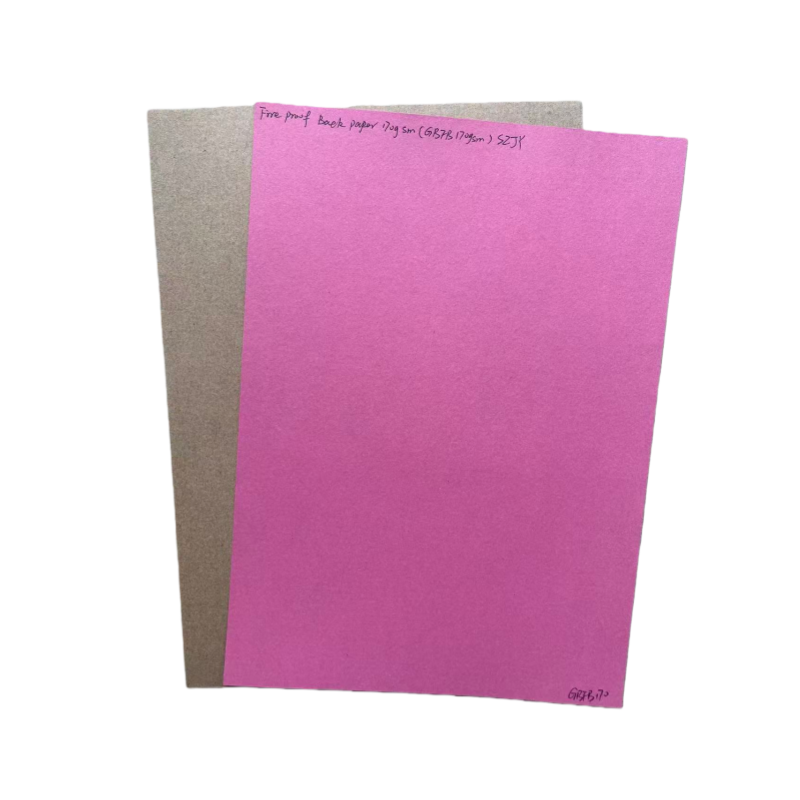
Modern building codes demand highly specialized construction materials. Standard boards cannot survive in harsh commercial environments. Bathrooms require intense moisture resistance capabilities. Commercial corridors demand strict fire spread prevention. Sourcing teams must evaluate these advanced solution categories rigorously. Mistakes here lead to massive liability issues.
Wet areas destroy standard paper very quickly. You need a dedicated Waterproof Gypsum Liner for these spaces. Mills treat the paper using specialized sizing agents. They typically apply wax or advanced silicone emulsions. These chemicals coat the individual cellulose fibers entirely.
Check Sizing Chemistry: Ask the supplier about their specific emulsion formulations. Silicone offers superior long-term performance over basic wax.
Evaluate Cobb Test Values: The Cobb test measures water absorption rates over time. Lower values indicate superior resistance to moisture penetration.
Verify Third-Party Data: Never trust internal supplier tests alone. Demand verifiable third-party testing reports for water resistance.
Common Mistake: Relying solely on a green-colored face paper. Color does not equal actual moisture resistance. Only sizing chemistry protects the board.
Fire-rated partitions protect human lives during building emergencies. The paper must complement the fire-retardant core perfectly. You must specify a certified Fireproof Gypsum Liner. The core usually contains dense fiberglass additives. The paper requires distinct chemical treatments to match this.
Examine Chemical Treatments: Suppliers add specific retardants during the pulping process. These chemicals actively retard flame spread across the surface.
Assess Smoke Generation: Burning paper generates dangerous smoke. High-quality fireproof liners limit toxic smoke production significantly.
Confirm Regional Fire Ratings: Products must meet strict building codes. Ensure the paper helps the board pass ASTM E84 tests. In Europe, verify compliance with EN 13501-1 standards.
Best Practice: Always test the fireproof paper alongside your specific core formulation. Compatibility between the two dictates the final fire rating.
Sourcing materials globally introduces significant compliance challenges. You must vet the legal footprint of every material. Environmental footprints matter deeply to modern consumers. Ignoring compliance puts your entire brand at risk.
Corporate ESG goals drive modern procurement strategies. Buyers actively seek materials with 100% recycled content. You must verify these claims carefully. Request official FSC (Forest Stewardship Council) documentation. Alternatively, accept PEFC chain-of-custody certifications. These certificates prove the pulp originates from responsible sources. Greenwashing remains a huge problem in paper sourcing. Authentic certificates protect your company reputation.
Cross-border shipping requires exact paperwork. You must verify the specific HS (Harmonized System) codes for plasterboard liner. Incorrect codes trigger immediate tariff misclassifications. Customs officers will detain shipments for weeks. These delays shut down production lines instantly. Work closely with customs brokers beforehand. Confirm the correct tariff rates for recycled industrial paper.
Industrial paper often contains residual chemicals from pulping. Ensure the material remains entirely free from restricted hazardous substances. Many markets enforce strict environmental safety laws. RoHS and REACH compliance apply in various global regions. Ask suppliers for a full chemical composition declaration. Heavy metals and toxic dyes must remain absent.
Committing to a multi-ton annual contract brings enormous risks. You must test a supplier comprehensively before signing anything. Procurement teams need a structured shortlisting logic. Promises on paper mean nothing without physical trials.
Consistency represents the single biggest risk in paper sourcing. One perfect roll does not guarantee future quality. You must establish strict tolerance limits early. Demand comprehensive Quality Assurance (QA) logs. Ask to review their past production runs. Consistent GSM and moisture profiles indicate a stable mill. Wild fluctuations highlight poor machinery calibration.
We strongly recommend a mandatory pilot phase. Never switch suppliers overnight. Advise your purchasing team to order a minimum trial batch. Run these specific rolls through your active kilns. Feed them onto your high-speed lines carefully. Monitor real-world adhesion dynamics closely. Observe the drying behavior inside the heating zones. A trial run exposes hidden weaknesses immediately.
Global supply chains face constant disruptions today. Evaluate the supplier's true resilience. Analyze their standard lead times carefully. Negotiate reasonable Minimum Order Quantities (MOQs). Investigate their raw material sourcing stability. Pulp availability fluctuates wildly across global markets. A mill without reliable pulp access will eventually fail you. Dual-sourcing strategies offer the best protection against shortages.
Common Mistake: Accepting excessively high MOQs for unproven suppliers. This traps capital in inventory that might fail quality tests later.
Strategic sourcing requires a deeply technical approach. First, request comprehensive TDS documentation from all candidates. Second, fiercely verify their face and back differentiation capabilities. Third, thoroughly check all specialty grade certifications for high-margin products. Finally, execute a rigorous production line trial before signing contracts.
Cutting corners on material procurement rarely works. Reiterate this reality to your purchasing teams frequently. Paying a slight premium for high-consistency paper is wise. This strategic investment saves massive costs in the long run. You avoid thousands of rejected boards. You prevent catastrophic manufacturing downtime entirely.
A: Typically ranges from 160 GSM to 220 GSM depending on the board's target thickness and application, with back liners often being slightly heavier or differently formulated than face liners.
A: The Cobb value measures surface water absorption. A lower Cobb value indicates higher resistance to moisture penetration, which is mandatory for wet-area boards.
A: Usually caused by incorrect paper porosity trapping steam, or inadequate ply bond strength in the paper itself. Highlights the need to test these specific metrics during sourcing.


