
Views: 0 Author: Site Editor Publish Time: 2026-07-09 Origin: Site


The packaging industry faces a continuous tension between structural rigidity, premium aesthetics, and environmental sustainability, making material selection a high-stakes decision. Procurement and packaging engineers frequently shortlist rigid materials like white faced grey cardboard for high-end applications, but face conflicting information regarding moisture resistance, outdoor weatherability, and long-term structural integrity in varied climates. Understanding how this substrate behaves under environmental stress determines whether a product launch succeeds or fails on the retail shelf. This analysis deconstructs the physical properties of white grey cardboard, separating inherent material realities from commercial treatments, to determine its viability for moisture-sensitive and high-durability applications. We will examine the core manufacturing processes, evaluate specific waterproofing techniques, and outline the exact testing protocols required to validate this material for demanding retail environments.
Inherent Vulnerability: In its raw, untreated state, white grey cardboard is highly durable and rigid, but it is fundamentally highly absorbent and *not* waterproof.
Engineered Durability: The material achieves exceptional crush resistance and load-bearing capacity due to its dense, recycled pulp core, making it a standard for premium rigid packaging.
Required Treatments: Achieving waterproof or highly water-resistant status requires secondary commercial processes (such as polymer lamination or specialized barrier coatings) or structural prototyping sealants (such as polyurethanes or acrylics).
Degradation Risk: Untreated grey board exposed to damp environments or outdoor elements will break down rapidly within weeks, losing all structural integrity.
Ideal Use Cases: When properly specified and treated, it is the optimal substrate for cosmetic box board, electronics packaging, and luxury retail goods requiring high shelf-presence and structural protection.
This packaging material features a distinct multi-ply construction engineered for maximum structural stability. The thick core consists of 100% recycled post-consumer waste, commonly known as grey board. Paper mills process mixed waste paper, removing contaminants before compressing the pulp into dense, rigid sheets. Manufacturers then bond this core to a bleached, virgin, or recycled white liner using industrial adhesives. The calendering process dictates the smoothness of this white facing. Heavy steel rollers compress the paper web under extreme pressure and heat to create a uniform, non-porous surface. This smooth finish allows for high-fidelity offset printing, foil stamping, and intricate embossing without the texture of the underlying recycled fibers bleeding through.
The manufacturing process requires precise moisture control. If the core retains too much water during the bonding phase, the final board will warp as it cures. Mills typically target a moisture content between 7% and 9%. The white liner must also possess sufficient opacity to mask the dark grey core completely. High-quality boards utilize a double-coated white liner, applying a base coat to seal the fibers and a top coat to optimize ink holdout.
Packaging engineers specify this material based on thickness and weight. Standard thickness ranges, or calipers, dictate the structural rigidity of the final box. Grams per Square Meter (GSM) is the standard measurement for commercial applications. Typical weights range from 300gsm for lighter folding cartons up to 1200gsm or more for heavy-duty rigid boxes. Selecting the correct GSM ensures the packaging can support the enclosed product without buckling under top-load pressure.
Standard GSM to Thickness Conversions for Rigid Board | ||
GSM (Grams per Square Meter) | Approximate Thickness (mm) | Typical Application |
|---|---|---|
400 - 600 GSM | 0.5mm - 0.9mm | Lightweight folding cartons, inner partitions |
800 - 1000 GSM | 1.2mm - 1.5mm | Standard rigid setup boxes, electronics packaging |
1200 - 1500 GSM | 1.8mm - 2.3mm | Premium luxury goods, heavy cosmetics |
1800+ GSM | 2.8mm+ | Heavy-duty displays, structural game boards |
Brands utilize this material across several premium retail sectors. Standard use cases include rigid setup boxes for electronics and luxury apparel packaging. It serves as the foundation for high-end cosmetic box board, protecting fragile glass containers from impact. Retailers also rely on it for point-of-purchase (POP) displays, where structural stability and vibrant graphics must attract consumer attention on the shop floor. The material's ability to hold sharp, 90-degree folds without cracking makes it the preferred choice for magnetic closure boxes and slipcases.
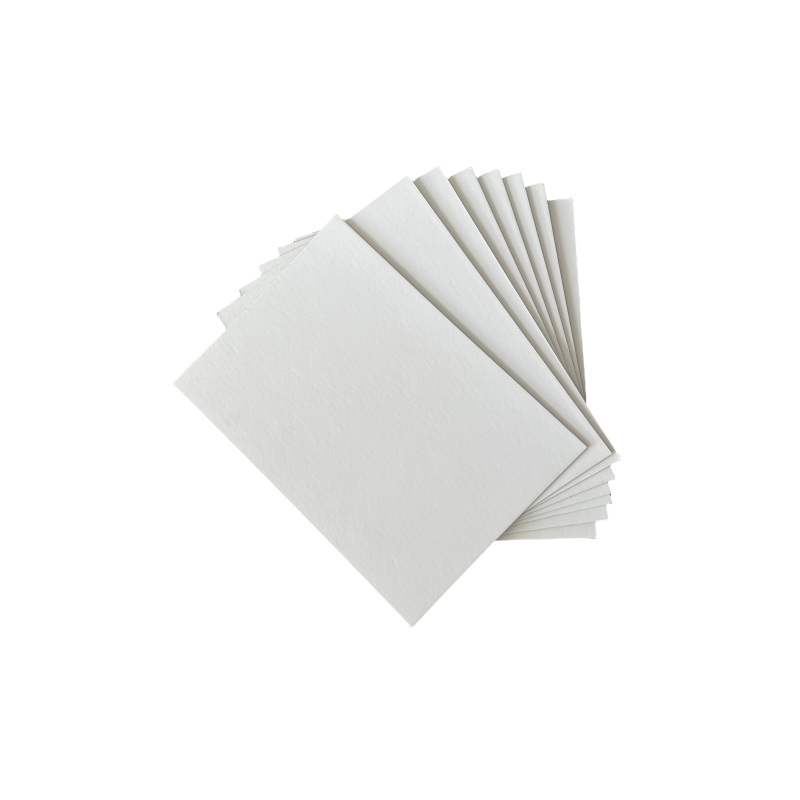
The dense, compressed recycled fibers of the underlying core provide superior rigidity. This material outperforms standard solid bleached sulfate (SBS) folding cartons in load-bearing capacity. It also offers a smoother, more premium feel than corrugated alternatives, which often show visible fluting lines through the printed liner. The tightly packed fibers resist compression, ensuring the box maintains its sharp corners and structural shape even when stacked on retail shelves or during transit.
When designing packaging for heavy items like liquor bottles or hardware, engineers rely on the board's high flat-crush resistance. Unlike corrugated board, which relies on air gaps and arches for strength, solid grey board derives its strength from sheer mass and fiber density. This solid construction prevents the packaging from denting or crushing under localized pressure, such as a tight strapping band during palletization.
Engineers evaluate durability using specific metrics like edge-crush test (ECT) equivalents and burst strength. Rigid boards score exceptionally well in these areas. The white facing adds a layer of tensile strength. This outer layer prevents surface cracking during the die-cutting and folding processes. A strong liner ensures the printed graphics remain pristine, even along sharp folds.
Burst Strength Testing: Measures the pressure required to puncture the board, indicating its ability to contain heavy or sharp objects.
Edge Crush Testing: Evaluates the board's top-to-bottom compression strength, vital for warehouse stacking.
Four-Point Bending Stiffness: Determines the material's resistance to bowing or flexing under a central load.
Tear Resistance: Assesses the force needed to continue a tear once initiated, heavily influenced by the quality of the white liner.
High durability introduces logistical challenges. Dense materials inherently weigh more. Higher durability equates to heavier dimensional weight, which directly impacts freight costs. Packaging designers must balance the need for structural protection against the increased shipping expenses. Optimizing the board thickness for the specific product weight helps mitigate unnecessary freight charges while maintaining brand presentation. Over-specifying a 1500gsm board for a lightweight silk scarf wastes material and inflates shipping budgets, whereas under-specifying a 600gsm board for a heavy glass candle jar risks product breakage.
The physical reality is straightforward. Because it is composed of hygroscopic cellulose fibers, raw material absorbs moisture rapidly. Water acts as a solvent for the hydrogen bonds holding the paper fibers together. When exposed to water, the degradation process begins immediately. The board experiences swelling, a complete loss of structural integrity, and eventual delamination between the core and the white liner.
The recycled nature of the core exacerbates this issue. Virgin fibers tend to have longer, stronger bonds, while recycled fibers are shorter and more prone to rapid saturation. When water hits the exposed grey edge of a die-cut board, capillary action pulls the moisture deep into the core, causing the material to expand up to 30% in thickness within minutes.
Packaging teams must establish clear success criteria. Surviving high ambient humidity defines water resistance. Surviving direct liquid submersion or spills defines waterproof capabilities. Some water-resistant surface treatments exhibit a "blushing" or whitening phenomenon. When saturated, the coating turns cloudy or white. This signals barrier failure and indicates that moisture penetration has reached the underlying paper fibers.
To quantify these properties, laboratories use the Cobb test. This test measures the amount of water absorbed by a specific area of the board over a set time (usually 60 seconds). A lower Cobb value indicates better water resistance. Untreated grey board will have an extremely high Cobb value, absorbing water almost instantly, while a properly coated board will show minimal weight gain.
Untreated material left outdoors or in wet conditions fails quickly. Natural decomposition begins within weeks to months in damp environments. Constant moisture accelerates structural collapse, turning rigid boxes into soft pulp. Packaging engineers must specify the required degree of moisture protection based on the actual product lifecycle. You must evaluate the entire supply chain, including unconditioned warehouses, maritime shipping routes, and final retail environments.
Applying Polypropylene (PP) or Polyethylene (PE) films to the white facing is a standard commercial practice. This process creates a true waterproof barrier on the exterior. It enhances tear resistance and provides premium tactile finishes, such as soft-touch matte or high-gloss. The lamination process involves feeding the printed board through heated rollers that melt a thin layer of adhesive, bonding the plastic film permanently to the paper surface.
However, lamination complicates end-of-life recyclability. Most municipal recycling facilities cannot separate the plastic film from the paper core, resulting in the packaging being sent to a landfill. Furthermore, lamination only protects the flat surfaces. It leaves exposed, untreated die-cut edges vulnerable to moisture ingress. If a laminated box sits in a puddle, water will wick up through the bottom edges, bypassing the plastic barrier entirely.
Liquid-applied coatings offer an alternative to plastic films. UV coatings provide moderate water resistance, offering excellent spill protection for retail environments. They cure instantly under ultraviolet light, creating a hard, protective shell. Aqueous coatings provide a lighter barrier, applied in-line during the printing process and dried via infrared heaters. Both options maintain better recyclability profiles than traditional plastic laminates, making them preferable for brands prioritizing environmental sustainability.
Comparison of Commercial Coating Methods | |||
Coating Type | Water Resistance Level | Recyclability | Visual Finish |
|---|---|---|---|
PP/PE Lamination | High (Waterproof surface) | Poor (Requires specialized facilities) | High Gloss, Matte, Soft-Touch |
UV Coating | Medium (Spill resistant) | Moderate (Can be repulped) | High Gloss, Textured |
Aqueous Coating | Low (Smudge resistant) | Excellent (Fully recyclable) | Satin, Soft Matte |
Barrier Dispersions | Medium to High | Excellent (Fully repulpable) | Matte, Semi-Gloss |
The industry is shifting toward emerging eco-friendly solutions. Water-based barrier dispersions are designed to repel water without utilizing traditional plastics. These advanced coatings block moisture vapor transmission while allowing the packaging to remain fully repulpable. They utilize natural polymers or synthetic resins that break down easily during the paper recycling process. They offer a balanced solution for brands needing robust moisture protection without compromising their environmental commitments.
Packaging engineers and designers frequently create functional mockups. Applying acrylic-based sealants or paints offers a quick, cost-effective way to seal the surface during the prototyping stage. Acrylics form a flexible, water-resistant skin over the paper. This allows teams to test the structural design in mildly damp conditions before committing to expensive commercial lamination runs. You can apply these sealants using standard spray equipment or high-density foam rollers for an even finish.
For mockups intended for outdoor exposure or rigorous physical handling tests, stronger sealants are necessary. Using clear polyurethane sprays creates an impenetrable, weather-resistant outer shell. Lacquer seals lock out ambient humidity and prevent the board from warping during extended testing phases. These sprays dry quickly and provide a realistic simulation of a fully laminated final product. When applying polyurethane, multiple thin coats provide better protection and a smoother finish than a single heavy coat.
Wax impregnation offers heavy-duty moisture protection. The industrial and manual process involves dipping or coating the board in liquid wax. This blocks water absorption across both the white face and the porous core. While highly effective for functional testing, wax-coated boards are difficult to glue and print on, limiting this method primarily to structural prototypes rather than aesthetic mockups. Wax also alters the dimensional thickness of the board, which you must account for when designing tight-fitting lids or inserts.
The beauty industry demands flawless presentation and robust protection. There is a strict necessity for rigid, unyielding packaging to protect fragile glass vials, compacts, and premium cosmetics. The thick core absorbs impact during transit, preventing costly product breakage. Simultaneously, the printability of the white facing allows for high-fidelity brand graphics, intricate foil stamping, and precise spot UV applications that luxury consumers expect.
Cosmetic brands often utilize custom inserts made from EVA foam or molded pulp, which are glued directly to the interior of the rigid box. The dense nature of the board provides an excellent bonding surface for these industrial adhesives, ensuring the insert remains securely in place during rough handling.
Cosmetic packaging lives in challenging environments. It must withstand fluctuating humidity and occasional water splashes typical of residential bathrooms. Engineers conduct rigorous environmental chamber testing to simulate these conditions. Specific coating requirements are necessary to prevent the core from warping. Without proper moisture barriers, the packaging will quickly lose its premium feel and structural shape in damp environments.
Accelerated Aging Tests: Exposing the packaging to 40°C and 75% relative humidity for 30 days to check for warping or adhesive failure.
Splash Testing: Dropping controlled amounts of water onto the surface and measuring the time it takes to penetrate the coating.
Adhesion Testing: Using cross-hatch tape tests to ensure the white liner does not delaminate from the core under high humidity.
Brands face a difficult trade-off. Achieving a completely waterproof cosmetic box typically requires plastic lamination. However, modern corporate sustainability mandates demand high recyclability. Packaging teams must navigate this conflict by exploring advanced aqueous barriers or designing easily separable components. The goal is to maintain luxury aesthetics while ensuring the packaging meets strict environmental compliance standards. Some brands now use unlaminated boards with heavy embossing to create a premium tactile experience without relying on non-recyclable plastic films.
Even with premium surface waterproofing, the die-cut edges of the board expose the raw core to moisture. Capillary action draws water into these exposed edges, causing swelling and delamination. To mitigate this, specify wrapped-edge rigid box designs. In turned-edge packaging, the waterproof cover material wraps completely around the raw edges, sealing the vulnerable core inside. This construction method requires specialized machinery but completely eliminates exposed paper edges.
Uneven moisture absorption causes the board to bow or warp. Applying heavy lamination to only one side creates unequal surface tension, exacerbating the problem. Ensure balanced moisture content during manufacturing. Consider applying a balancing back-liner or a light aqueous coating to the inside of the board to equalize tension and maintain dimensional stability. If the exterior features a heavy 1.5 mil PP laminate, the interior should have a similar moisture barrier to prevent the board from curling toward the dry side.
Variability in recycled pulp quality can lead to weak spots, inconsistent thickness, or poor layer adhesion. Require suppliers to provide strict GSM tolerances. Demand moisture content certifications, typically aiming for a 7-9% range. Request Cobb test results to verify water absorption rates before finalizing any large-scale material procurement. Conduct independent lab testing on the first production run to verify the supplier's technical data sheets match the actual delivered material.
Specify raw or lightly coated board for dry retail environments to maximize sustainability and reduce environmental impact.
Mandate polymer laminations or advanced barrier coatings alongside turned-edge construction for products exposed to moisture.
Request material samples with varying levels of aqueous, UV, and laminate coatings to evaluate tactile feel and performance.
Conduct localized Cobb testing for water absorption and environmental chamber testing for humidity resistance before finalizing procurement contracts.
A: No. It is made from recycled wood pulp and cellulose fibers, making it highly absorbent. It will warp and degrade if exposed to water without a protective finish.
A: Commercial waterproofing is achieved by applying Polypropylene (PP) film laminations, heavy UV coatings, or specialized water-based barrier dispersions to the surface of the board.
A: Yes. For functional mockups or physical samples, engineers can apply acrylic sealants, clear polyurethane spray, or liquid wax to protect the material from moisture during evaluation.
A: Yes, grey board is highly durable and offers excellent crush resistance, making it ideal for rigid setup boxes and protecting fragile or heavy items during transit.
A: Cosmetic box board typically utilizes white faced grey cardboard because it combines the structural rigidity needed to protect glass containers with a smooth, white surface ideal for high-end printing and finishing.
A: Yes. Applying plastic laminations (like PE or PP films) to make the board waterproof generally renders it non-recyclable in standard municipal streams. Opting for aqueous coatings offers a more eco-friendly, albeit less waterproof, alternative.
A: If left exposed to direct rain and damp soil, untreated board will begin to lose structural integrity within a few days and will naturally decompose or break down completely within a few weeks to months.


