
Views: 0 Author: Site Editor Publish Time: 2026-05-25 Origin: Site


B2B procurement teams and packaging engineers face a constant challenge. You must balance premium unboxing aesthetics against heavy-duty structural integrity. You also need to keep tight budget constraints in check. Pure white paperboard often lacks the raw strength needed for heavy global shipping. Conversely, raw greyboard looks unrefined. It requires complex full-surface wrapping to achieve a luxury feel. We offer a proven hybrid solution. You can seamlessly combine a recycled strong core and a premium bright facing. Choosing the right substrate remains a critical strategic decision. This choice directly impacts your shipping damage rates. It also heavily influences brand perception and ESG compliance metrics. You need clear data to make this call. This guide provides an evidence-based breakdown. We will explore why, when, and how to specify this composite material for commercial packaging rollouts. Read on to master your next structural packaging design.
Structural & Aesthetic Hybrid: It bridges the gap between the raw strength of standard greyboard and the high-fidelity printability of pure white board.
Cost Efficiency: Offers the luxurious feel of high-end virgin pulp board at a fraction of the cost by utilizing a recycled core.
Scalable Customization: Available in precise thickness ranges (1mm to 3mm+) to suit everything from lightweight cosmetic boxes to heavy-duty magnetic closures.
Mitigated Risks: Understanding how to pair it with protective coatings and outer shippers eliminates common drawbacks like dirt visibility and moisture damage.
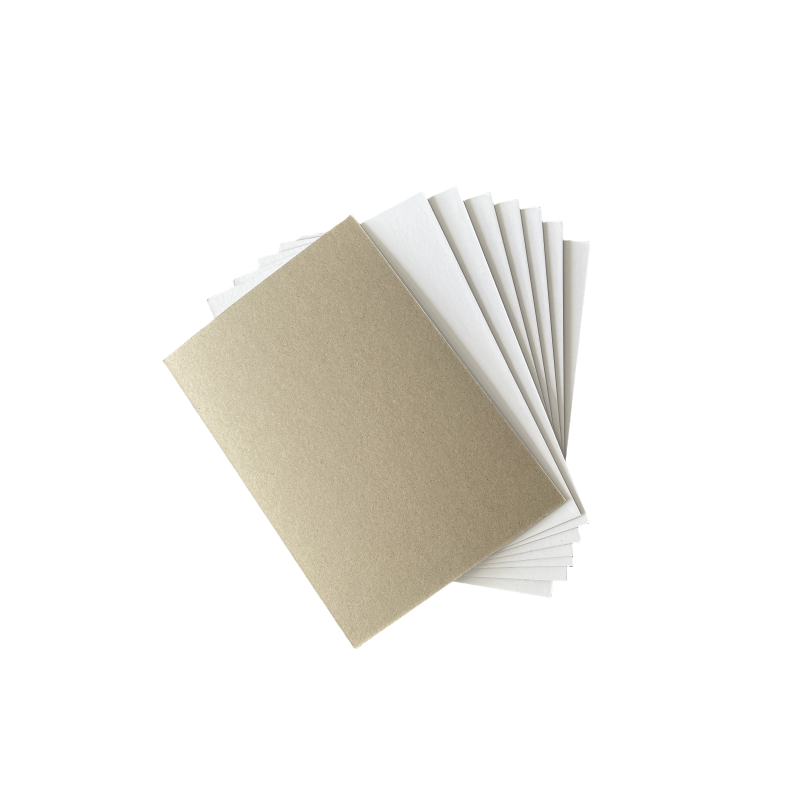
Packaging specifiers often struggle to find a single material doing two jobs. You need structural defense and visual appeal. white grey cardboard solves this divide perfectly. We define this material objectively as a highly engineered composite. It features a dense, thick core. Manufacturers make this core from 100% recycled post-consumer waste. This inner layer behaves just like standard industrial greyboard. However, the outer layer changes the game. Factories pair the dark core with a bleached or coated white liner.
In technical procurement terms, professionals refer to this as laminated white grey cardboard. This specific naming clarifies the manufacturing process. Factories press and laminate the bright white facing directly onto the recycled core under high pressure.
B2B buyers actively transition to this material to solve specific procurement bottlenecks. Pure white cardboard, such as Solid Bleached Sulfate (SBS), has limits. It lacks the rigidity required for heavy luxury items. SBS also becomes prohibitively expensive at higher thicknesses. Conversely, pure greyboard lacks internal visual appeal. It forces manufacturers to apply full-surface paper wrapping. This wrapping step complicates production timelines. The composite approach removes these hurdles entirely. You get the strength of waste paper and the beauty of virgin pulp in one sheet.
Physical protection remains the primary job of any transport packaging. This material excels here. The dense recycled core provides exceptionally high compression strength. It actively prevents crushing, denting, or warping during complex global transit. Heavy products demand this level of structural defense. This dynamic makes it the premier rigid box cardboard for demanding applications. Electronics, thick glass bottles, and hardware rely on it heavily. The board absorbs impact energy rather than transferring it to your product.
Visual mechanics matter deeply in retail. The white facing allows for high-contrast offset printing. You can execute complex flood-printing for dark, rich backgrounds. You can also print crisp, highly legible reverse-out text. This pristine surface prevents the notorious "color muddying" effect. Muddying happens when printing directly onto untreated brown or grey surfaces. The white base acts as a perfect canvas. It guarantees color accuracy across massive global production runs.
Never underestimate subconscious buyer responses. Consumers react instantly to packaging colors. A white interior or exterior signals hygiene. It implies precision, safety, and modern luxury. Buyers heavily prefer this pristine look. Pharmaceuticals, high-end cosmetics, and premium food packaging leverage this psychological trigger. When a customer opens a box and sees a bright white interior, perceived product value spikes.
Financial viability drives every B2B packaging rollout. You must justify material upgrades to stakeholders. The cost-to-performance ratio here heavily favors the composite approach. Compare this material against solid bleached sulfate (SBS) or pure virgin white pulp boards. Solid virgin boards require expensive, newly harvested wood pulp for their entire thickness. This drives raw material costs through the roof.
Material economics explain the massive cost advantage. Utilizing a recycled grey core drastically lowers overall raw material expenses. You only pay for premium virgin pulp on the thin, consumer-facing side. The bulky, hidden core utilizes cheap, abundant post-consumer waste. This strategy keeps the aesthetic premium while slashing the bill.
Furthermore, consider downstream operational savings. You will minimize expensive transit damage due to the core's high rigidity. Fewer crushed boxes mean fewer customer returns. Printing costs drop as well. Raw greyboard requires multiple layers of opaque white ink to hide the dark background. The pre-laminated white facing eliminates this heavy ink requirement. You achieve striking visuals using standard ink volumes. These combined efficiencies protect your profit margins effectively.
Packaging specifiers must match material thickness to the exact product weight. Guessing leads to structural failure or wasted money. We provide a direct thickness and density guide to streamline your engineering process.
Thickness Range | Strength Category | Best Application Types | Typical B2B Rollouts |
|---|---|---|---|
1.0mm - 1.5mm | Light to Medium Duty | Folded inner trays, partition dividers | Standard cosmetic rigid boxes, puzzle boards |
1.8mm - 2.0mm | Industry Standard | Premium retail presentation boxes | Smartphone packaging, hardcover bookbinding |
2.5mm - 3.0mm+ | Heavy Duty | High-strength custom shapes | Magnetic closure boxes, heavy liquor packaging |
1.0mm - 1.5mm (Light to Medium Duty): This range works beautifully for internal structures. Use it for folded inner trays or puzzle boards. It provides enough stiffness for standard cosmetic rigid boxes without adding unnecessary shipping weight.
1.8mm - 2.0mm (Industry Standard): Consider this the sweet spot for premium retail presentation. It feels substantial in the consumer's hand. It proves ideal for standard rigid gift boxes and smartphone packaging. Book publishers rely on this thickness for hardcover binding.
2.5mm - 3.0mm+ (Heavy Duty): Heavy products require absolute structural dominance. Specify this thickness for high-strength custom shapes. Magnetic closure boxes, drawer boxes, and heavy liquor packaging demand this level of durability. It ensures zero flex under heavy loads.
Every material has flaws. Trustworthy engineering requires acknowledging these limitations upfront. We actively highlight potential risks. More importantly, we provide practical design solutions to overcome them.
The Reality: White surfaces show warehouse dust easily. Transit friction causes visible scuff marks. A pristine box can look dirty upon arrival.
Workaround: We highly recommend a "Brown Out, White In" strategy. Use a corrugated kraft master shipper for external transit. Place your white composite cardboard as the primary internal retail box. Alternatively, specify matte or anti-scratch laminations. These protective films repel dirt and resist scuffing during handling.
The Reality: Consumers judge packaging by its cover. They often mistakenly assume white packaging means harsh chemical bleaching. They think it lacks recycled materials.
Workaround: You must educate buyers proactively. Explicitly print FSC certifications on the packaging. Add clear "100% Recycled Core" messaging on the bottom of the box. This transparency counters greenwashing skepticism. It proves your brand values sustainability.
The Reality: Like all paperboards, the exposed edges can absorb humidity. High moisture environments lead to warping and structural degradation.
Workaround: Anticipate your global supply chain conditions. Specify water-based coatings to seal the paper fibers. Water-based options remain preferable for strict ESG compliance. If shipping through extreme high-humidity regions, use PE laminations. This creates an impenetrable moisture barrier.
Selecting packaging materials requires a systematic approach. Use this decision matrix to shortlist or eliminate this composite material rapidly.
Choose this material if: You absolutely need high rigidity. You require vivid interior or exterior graphics. You possess a mid-to-high tier budget allocated for premium rigid structures.
Avoid this material if: You ship low-margin, high-volume retail goods. Standard folding cartons serve this need better. Also avoid it if you strictly want an organic, rustic brand aesthetic. Raw kraft or pure greyboard fits that rustic vibe perfectly.
Never place a mass order based on digital renderings alone. Advise your engineering team to request unprinted CAD prototypes first. Use these blanks to test the physical GSM (grams per square meter) strength. Drop-test the blanks with your actual product inside. Next, order physical drawdowns from your printer. Drawdowns verify exact color accuracy on the specific white coating. Testing ensures your massive production run executes flawlessly.
Choosing the right packaging substrate determines the success of your retail presentation. White grey cardboard represents a calculated engineering compromise. It is much more than a simple aesthetic choice. It delivers luxury presentation and robust structural defense simultaneously. It achieves this without the premium cost associated with solid virgin board. You secure your supply chain, protect your products, and delight your consumers. We encourage you to consult directly with your packaging manufacturer today. Ask them to match the exact GSM and coating specifications to your product’s specific weight. Tailor the design to survive your unique supply chain rigors.
A: Yes, it is highly sustainable. The thick internal core utilizes 100% post-consumer waste paper. This keeps massive amounts of paper out of landfills. Modern white facings also utilize eco-friendly water-based coatings instead of harmful plastics, ensuring high recyclability.
A: The difference lies in thickness and application. Duplex board with a white back is a thinner variant. Factories typically use duplex for lightweight folding cartons. Conversely, laminated composite versions refer to thicker, heavy-duty applications like rigid luxury boxes.
A: The raw material itself is generally not food-grade. This is due to the recycled post-consumer waste inside the core. However, it becomes perfectly safe when paired with a food-safe PE coating. You can also use an internal FDA-approved barrier tray.


