
Views: 0 Author: Site Editor Publish Time: 2026-05-27 Origin: Site


Selecting the exact thickness for a laminated grey board directly impacts unit cost, shipping weight, and overall brand perception. Global buyers constantly face a tough balancing act when defining structural specifications for modern retail environments.
Over-specifying board thickness drains profit margins rapidly and significantly increases ongoing freight costs. Conversely, under-specifying risks compromised structural integrity. This material failure inevitably causes damaged consumer goods during rough transit. You must find the precise middle ground to protect your bottom line effectively.
This comprehensive guide provides a robust technical evaluation framework for your next commercial project. It helps procurement teams and packaging designers finalize board specifications confidently. You will learn how to balance product weight, box dimensions, and strict factory manufacturing constraints. Applying this knowledge ensures a highly successful and cost-effective packaging production run.
Thickness vs. GSM is not linear: Understanding the conversion between millimeters (mm), points (pt), and Grams per Square Meter (GSM) is critical for accurate supplier specifications.
Application dictates specification: Standard corporate gift boxes typically require 1.5mm to 2.0mm boards, while heavy electronics or luxury rigid boxes demand 2.5mm to 3.0mm+.
Manufacturing constraints matter: Board thickness alters die-cutting tolerances, V-grooving requirements, and the tension placed on outer wrapping materials.
Prototyping is non-negotiable: Theoretical load-bearing calculations must be validated through physical mock-ups and transit testing before mass production.
Procurement teams often face mismatched quotes from global factories. Suppliers routinely use entirely different regional metrics. European and Asian manufacturers favor GSM and millimeters. North American teams traditionally prefer points or caliper measurements. This regional divide creates immense confusion during the quoting process.
You must establish a shared language before signing any supplier contracts. Understanding the core terminology prevents costly manufacturing errors down the line.
Millimeters (mm): The exact physical caliper measurement of the board. You measure this using a digital micrometer.
Grams per Square Meter (GSM): The actual physical weight of the material. It measures mass rather than thickness.
Points (pt): A traditional imperial measurement. One single point equals exactly 0.001 inches.
Translating thickness into weight requires baseline reference data. High-quality boards maintain a specific density ratio. You can use the chart below as a reliable industry benchmark.
Thickness (mm) | Approximate Points (pt) | Estimated Weight (GSM) |
|---|---|---|
1.0 mm | 40 pt | 600 - 650 GSM |
1.5 mm | 60 pt | 900 - 950 GSM |
2.0 mm | 80 pt | 1200 - 1300 GSM |
2.5 mm | 100 pt | 1500 - 1600 GSM |
3.0 mm | 120 pt | 1800 - 1900 GSM |
Moisture content and compression density cause slight variances. The lamination process involves water-based glues. These glues add temporary moisture weight before curing. Density pressure during rolling also compresses the fibers tightly. High-pressure rolling yields a thinner board sharing the same heavy GSM.
You should always require suppliers to specify both thickness and weight clearly. Some factories attempt substituting lower-density boards secretly. A loosely packed board might technically meet your 2.0mm caliper specification. However, it will fail miserably in structural rigidity. Demanding both metrics guarantees you receive the dense, high-quality material you paid for.
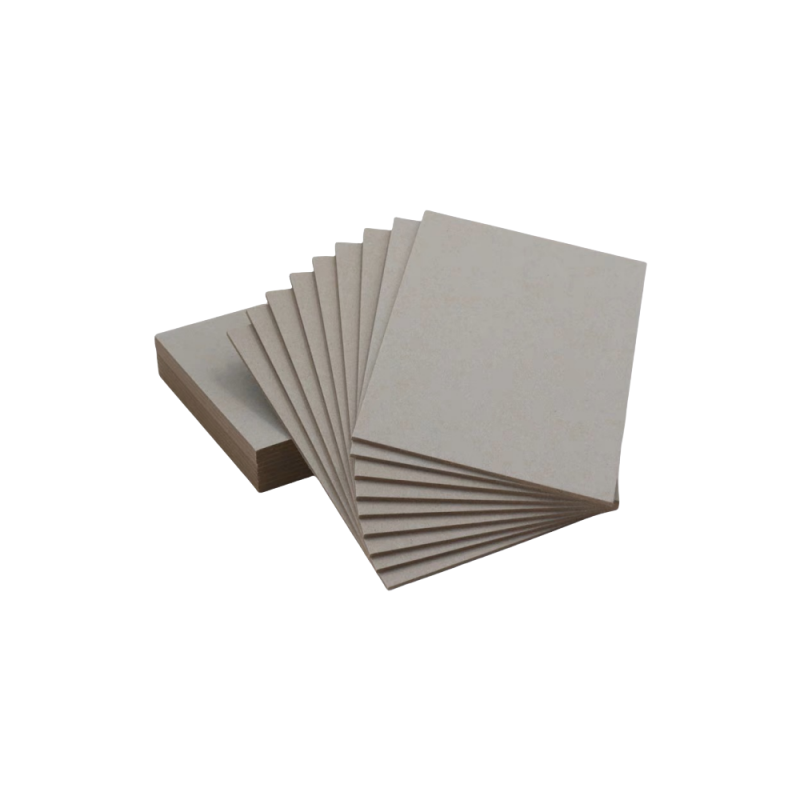
Selecting an ideal grey laminated board requires analyzing your intended end-use thoroughly. Decision-makers must align the material thickness perfectly alongside product requirements. We categorize standard thickness tiers below based on proven industry applications.
This tier represents the thinnest viable option for rigid structures. Factories construct these boards using fewer laminated layers.
Best for: Small cosmetics, foldable rigid boxes, and lightweight consumer goods. Jewelry inserts and lightweight pharmaceutical boxes also utilize this tier frequently.
Outcomes: This category remains highly cost-effective. It offers the lowest dimensional shipping weight possible. Factories can fold and score these boards effortlessly. However, this thickness proves entirely unsuitable for heavy items. Easily crushed products require significantly more protection.
Most commercial brands default to this versatile middle tier. It provides excellent structural stability without excessive bulk.
Best for: Corporate gift boxes, standard apparel packaging, mid-tier electronics, and skincare kits. Subscription box brands also rely heavily on this thickness.
Outcomes: You achieve the optimal balance combining premium rigidity and cost-efficiency. This thickness supports standard external wrapping flawlessly. It handles magnetic closure integration perfectly without unwanted bowing. Consumers perceive this thickness as professional and highly durable.
Ultra-premium products demand maximum physical protection and tactile weight. Thick boards communicate uncompromising luxury instantly.
Best for: Premium liquor, heavy consumer electronics, high-end luxury goods, and oversized presentation boxes. Limited edition collector sets also utilize these massive boards.
Outcomes: You secure maximum structural integrity alongside ultimate crush resistance. The heavy box communicates a highly premium tactile feel naturally. Customers equate heavy packaging directly to product value. However, this upgrade significantly increases your dimensional weight for global shipping.
Board thickness dictates the physical lifecycle characterizing your packaging. Every millimeter added changes structural mechanics drastically. You must evaluate these specific physical dimensions closely.
Surface area drastically alters how a board behaves under stress. A large 2.0mm box may bow noticeably under its own weight. Conversely, a small 2.0mm box feels virtually like solid wood. Box dimensions must scale proportionately alongside board thickness.
You cannot use a 1.5mm board for a massive 50cm wide presentation box. The lid will inevitably sag in the center. Always increase your thickness tier when expanding the overall surface area. This ensures the structural geometry remains perfectly stable.
You must understand how raw materials react to environmental humidity. Paper fibers absorb ambient moisture aggressively. Thicker boards inherently resist severe warping better. However, they only succeed if factories cure the adhesive moisture properly.
Poorly cured lamination glues trap moisture deep inside the layers. This trapped moisture eventually evaporates unevenly. The uneven drying process warps even the thickest 3.0mm boards easily. You should mandate strict moisture content limits during quality control inspections. Ideally, boards should stabilize between 8% and 12% moisture content before final conversion.
Adding material thickness introduces an explicit financial trade-off. Your packaging becomes noticeably heavier. Upgrading a project from 1.5mm to 2.5mm can increase the overall pallet weight by 40% to 60%.
You must calculate the total logistics and freight expenses carefully. Do not solely evaluate the base unit cost of the packaging board itself. Air freight penalizes heavy rigid boxes severely. Ocean freight absorbs the extra weight better but still faces strict container load limits. Supply chain teams must model these exact shipping penalties before finalizing the structural design.
Designers often specify beautiful structures on paper. However, implementation risks emerge quickly on the busy factory floor. Choosing the wrong thickness creates severe manufacturing bottlenecks.
Factories cut flat boards into specific box patterns using massive machines. Standard flatbed die-cutters handle materials up to 2.0mm smoothly. They often struggle significantly with boards over 2.5mm.
Thicker boards require specialized heavy-duty rotary equipment. Not every factory owns these expensive, high-pressure machines. Specifying a 3.0mm board limits your potential supplier choices immediately. It also slows down the overall machine running speed. Slower machine speeds inevitably increase your final labor costs per unit.
Luxury rigid boxes require precise V-grooving for sharp aesthetic corners. The machine cuts a deep V-shaped trench directly into the board. This trench allows the material to fold precisely at a perfect 90-degree angle.
You cannot V-groove ultra-thin boards successfully. Boards under 1.5mm lack sufficient depth for the trench. The cutting blade leaves too little material behind. This compromises the hinge completely, risking total structural failure. Always specify 1.5mm or thicker when your design mandates sharp V-grooved corners.
Rigid boxes feature an external layer of printed wrapping paper. The underlying board thickness dictates the tension placed on this wrapper.
Thicker boards create wider exterior corners. These wide corners stretch the outer wrapping material tightly during the folding process. The excessive tension often tears standard art paper at the hinges. We advise pairing thick boards exclusively alongside durable, reinforced wrapping materials. Specialty kraft papers, textured fabrics, and reinforced laminations prevent tearing over thick corners.
You need a systematic approach to lock in your final materials. Guesswork leads to expensive mass-production disasters. Use this structured decision framework to guide your purchasing team.
Define the maximum internal product weight: Weigh your heaviest product configuration accurately. Heavy glass jars demand much thicker boards than lightweight foam sponges.
Determine target dimensional shipping weight limits: Consult your logistics team immediately. Establish the maximum allowable weight per master carton to avoid expensive courier surcharges.
Select the target thickness based on brand positioning: Align the tactile feel alongside your retail price point. Luxury price tags absolutely require rigid, uncompromising tactile experiences.
Request physical blank dummies: Ask your supplier for unprinted prototypes. You should request dummies at three different thicknesses simultaneously. Testing 1.5mm, 2.0mm, and 2.5mm side-by-side provides vital comparative data.
Never approve a mass production run based solely on digital 3D renderings. You must evaluate the physical blank dummies rigorously.
Instruct buyers to perform aggressive drop tests on the unprinted prototypes. Check the corner stability by pressing firmly on the edges. Evaluate how the lid slides over the base. Thicker boards sometimes create excessive friction, making the box difficult to open. Validate these physical mechanics thoroughly before committing to expensive, fully printed sample runs.
Specifying board thickness is ultimately an exercise in balancing structural mechanics alongside strict supply chain economics.
You must ensure the chosen material supports both the product weight and the overall box dimensions proportionately.
Thicker materials deliver a premium tactile experience but drastically increase your dimensional shipping weight and freight costs.
Always validate theoretical measurements through physical prototyping and rigorous transit testing before beginning mass production.
Remember, there is no universal "best" thickness. You only have the most appropriate thickness tailored for your specific product weight, physical dimensions, and profit margin profile. We highly encourage buyers to contact their packaging engineer or trusted supplier today. Request structural samples and exact GSM-to-thickness conversion charts specifically customized for your next major project.
A: Generally yes, but compression density during manufacturing creates variance. Two boards sharing the exact same GSM could yield slightly different caliper measurements. High-density pressing makes the material thinner but significantly stronger. You should always verify both metrics closely with your supplier.
A: The glue layers and outer facing paper add marginal thickness. This usually totals between 0.1mm and 0.2mm. Precision matters deeply in tight-tolerance designs. You must account for this added bulk when calculating inner dimensions for custom inserts or product trays.
A: Industry experts highly discourage this approach. Thick 3mm boards create excessively bulky hinges. This bulk causes magnetic closures to fail due to intense outward tension. Most packaging engineers consider 1.5mm to 2.0mm the ideal standard for functional, flat-folding structures.


