
Views: 0 Author: Site Editor Publish Time: 2026-07-13 Origin: Site


Packaging procurement faces a constant tension between delivering a flawless unboxing experience and managing escalating material costs alongside strict sustainability mandates. Selecting a rigid substrate requires absolute structural integrity. The material must resist warping under varying environmental conditions while offering a pristine surface for high-fidelity printing, foil stamping, and deep blind embossing. single white side grey cardboard serves as the strategic middle ground for these requirements. It combines the structural reliability of traditional rigid boards with the aesthetic readiness of premium bleached liners. Procurement teams and packaging engineers must evaluate specifications, identify optimal use cases, and manage material selection to ensure premium packaging performs flawlessly on automated assembly lines and in the hands of the end consumer.
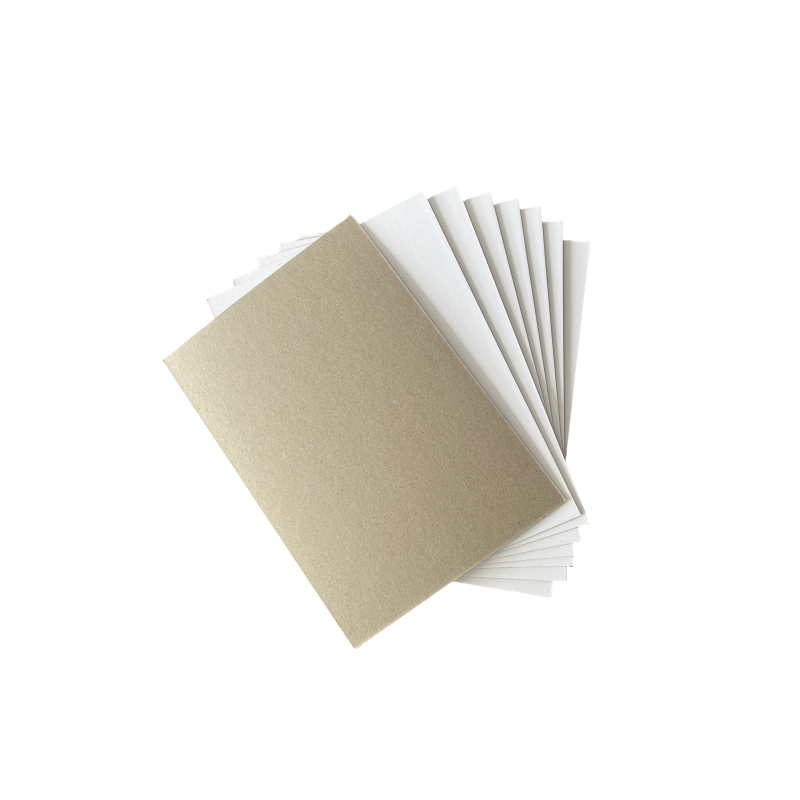
Structural vs. Aesthetic Balance: Single white side grey cardboard offers the high rigidity of recycled pulp cores with a pre-lined, printable white surface, reducing secondary wrapping costs.
Cost Efficiency: Provides a 15-30% cost reduction compared to solid bleached sulfate (SBS) or C2S boards at equivalent calipers, without sacrificing exterior visual quality.
Optimal Applications: Best specified for rigid setup boxes, cosmetics packaging, and consumer electronics where internal structure is hidden or wrapped, but the exterior demands high-end finishing.
Risk Management: Procurement must strictly evaluate moisture content (typically 8-12%) and ply-bond strength to mitigate warping and delamination during automated die-cutting and gluing.
Understanding the material composition is the first step in substrate selection. The manufacturing process utilizes a multi-ply cylinder or Fourdrinier machine. The core layer consists of recycled post-consumer waste, providing high bulk and stiffness. The top liner features bleached virgin or high-grade recycled pulp. This multi-layer approach ensures structural density while delivering a clean, printable face.
Functional differences separate this material from standard substrates. Standard uncoated grey board lacks a printable surface and requires full paper wrapping for any aesthetic application. Traditional book binding board is highly compressed for maximum rigidity but also needs secondary covering. The pre-lined white surface eliminates one wrapping step entirely, streamlining production on automated rigid box makers like Emmeci machines.
Standard commercial availability covers a wide grammage range. Base weights typically range from 250gsm to 450gsm. For rigid applications, mills provide custom laminated sheets reaching up to 1200gsm or more. Caliper consistency is critical for automated packaging lines. Thickness variations cause jamming in die-cutting machinery and uneven scoring.
Core formation using post-consumer recycled fibers for maximum bulk.
Application of the bleached white liner via multi-ply cylinder vats.
Press section consolidation to ensure high ply-bond strength.
Calendering to achieve the required surface smoothness for offset printing.
Density profiles dictate surface flatness. white grey cardboard maintains a balanced density compared to highly compressed alternatives. Surface flatness prevents liner telegraphing, which occurs when core texture shows through the top liner. A smooth, flat profile ensures flawless lamination and printing results.
A successful luxury box merges engineering precision with consumer psychology. The tactile feel of a rigid box communicates brand value instantly. The weight, sharp corners, and smooth finish set consumer expectations before the product is even seen. Substandard materials compromise this initial interaction.
Primary packaging functions require a strict balance. Standard transit requirements demand product protection, load containment, and drop resistance. High-end structural stiffness prevents crushing during global shipping. The substrate must absorb impact without transferring force to the fragile contents inside.
Dimensional stability is a non-negotiable requirement. Zero-warp performance under varying humidity levels is essential. Global shipping exposes pallets to extreme climate fluctuations. A board that bows or twists destroys the structural integrity of a rigid setup box. Moisture control during manufacturing dictates this stability.
Surface smoothness determines print quality. The Parker Print Surf (PPS) measurement evaluates this metric. A low-porosity white surface holds ink gloss effectively. High porosity absorbs ink, resulting in dull, washed-out colors. A smooth surface also supports intricate hot foil stamping and sharp blind embossing without fracturing.
Sustainability compliance drives modern packaging decisions. Brands must meet strict ESG goals. Utilizing a high percentage of recycled content in the grey core satisfies environmental mandates. Maintaining a virgin-like exterior satisfies aesthetic requirements. This dual-benefit makes the material highly attractive for global brands.
Material selection requires analyzing structural cost-efficiency against aesthetic demands. Each substrate presents distinct trade-offs for rigid packaging applications.
Solid Bleached Sulfate (SBS) offers pure white edges and interiors. It delivers excellent printability. However, it offers lower rigidity per unit of thickness. White grey cardboard wins on structural cost-efficiency. It requires edge-concealing designs to hide the grey core, but the savings justify the engineering adjustment.
Unlined grey board is the standard for internal structures. It requires full interior and exterior paper wrapping for luxury applications. Single white side grey cardboard eliminates one wrapping step. This reduces machine time, lowers adhesive use, and simplifies the assembly process.
Coated Two Sides (C2S) board is ideal for folding cartons requiring internal printing. It lacks the bulk needed for heavy-duty protection. White grey cardboard is superior for rigid, thick-walled boxes. It performs exceptionally well when the interior is fitted with custom inserts that hide the unlined side.
Standard book binding board is optimized purely for dense stiffness and wrap-adhesion. It has a rough surface unsuitable for direct printing. Single white side grey cardboard offers a pre-finished, print-ready face. This removes the need for secondary white liners, streamlining production.
Material | Primary Advantage | Primary Disadvantage | Best Application |
|---|---|---|---|
White Grey Cardboard | Cost-effective rigidity with print-ready face | Grey core visible on raw edges | Rigid setup boxes, electronics packaging |
Solid Bleached Sulfate (SBS) | Pure white throughout, excellent printability | Lower stiffness per caliper | Premium folding cartons, cosmetics |
Unlined Grey Board | Maximum cost efficiency for hidden structures | Requires full wrapping for aesthetics | Internal box structures, heavy book covers |
Book Binding Board | Extreme density and warp resistance | Rough surface, cannot be printed directly | Hardcover books, heavy slipcases |
Rigid setup boxes and premium gift packaging rely heavily on this material. Manufacturers use the white side for direct offset printing. They use the grey side as the adhesive base for internal velvet or paper liners. This creates a luxurious exterior and a protected interior.
Cosmetics and fragrance secondary packaging demand high structural support. Heavy glass bottles require rigid containment. The application mechanics utilize the white surface for advanced finishing. Soft-touch lamination, UV spot coatings, and foil stamping adhere perfectly to the smooth top liner.
Consumer electronics unboxing experiences require precision engineering. Sharp, crisp lines define modern tech packaging. The application mechanics involve creating sharp 90-degree V-groove folds. The dense core supports the V-groove without tearing, forming perfect corners for smartphone and wearable device boxes.
Luxury slipcases and book-style portfolios benefit from the dual-nature of the board. The application mechanics provide the structural density of a heavy-duty board. The clean, printable white interior liner elevates upscale publication slipcases. It eliminates the need to glue a separate white sheet inside the case.
Caliper, grammage, and structural integrity dictate load-bearing capacity. Specific thickness-to-weight ratios prevent crushing during palletization. Evaluating stiffness requires testing both Machine Direction (MD) and Cross Direction (CD). Consistent MD/CD ratios ensure the box will not collapse under warehouse stacking pressure.
Printability and finishing compatibility depend on the top liner. Ink holdout capabilities determine color vibrancy. Performance under pressure is equally critical. The grey core must absorb the impact of deep blind embossing. If the core is too brittle, the white surface will fracture during the stamping process.
Machinability and die-cutting performance impact production speed. Evaluating ply-bond strength ensures clean die-cut edges. Weak ply-bonds cause delamination during automated stripping. Scoring and folding tolerances must be exact. Proper moisture levels prevent liner cracking on sharp creases during the folding stage.
Managing moisture content and warping is the primary operational challenge. Differential moisture absorption between the white liner and grey core causes the board to bow. Mitigate this by specifying strict moisture tolerances, typically 10% ± 2%. Require climate-controlled transit and storage facilities to maintain board equilibrium.
Adhesive compatibility for wrapping and assembly requires testing. Delamination or bubbling can occur when applying animal glues or EVA hot melts to the grey side. Mitigate this by conducting dyne level testing. Match the adhesive viscosity to the specific porosity of the grey board side to ensure permanent bonding.
Supply chain and batch consistency affect brand identity. Variations in the whiteness of the top liner across different mill runs alter final print colors. The CIE whiteness index measures this metric. Mitigate this risk by establishing strict delta-E color tolerances with the mill prior to procurement.
Single white side grey cardboard is the optimal choice for rigid luxury packaging where structural integrity and exterior aesthetics are paramount, and interior board color can be managed via design. Choose this material when transitioning from standard folding cartons to rigid setup boxes, or when looking to reduce the material costs of SBS without compromising the exterior unboxing experience.
Instruct procurement teams to request physical drawdowns from multiple mills to verify surface smoothness.
Specify required GSM, caliper, and moisture tolerances in all purchase orders to prevent warping.
Order blank prototypes for drop-testing and V-groove evaluation on automated machinery.
Conduct adhesive compatibility tests with your specific assembly glues (protein or EVA).
A: Standard grey board is made entirely of recycled pulp and has a rough, unlined surface on both sides. White grey cardboard features a bleached virgin or high-grade recycled white liner on one side, providing a smooth, print-ready surface while maintaining a rigid recycled core.
A: Yes. The white lined side is specifically engineered for direct offset and digital printing. It features a low-porosity surface that holds ink gloss well and supports advanced finishing techniques like foil stamping and UV coating.
A: Yes. The dense recycled core provides the necessary structural integrity to support sharp 90-degree V-groove cuts. This allows for precise, crisp corners essential in high-end consumer electronics and luxury setup boxes.
A: White grey cardboard is generally more cost-effective when factoring in total production costs. The pre-lined white surface eliminates the need for secondary paper wrapping on one side, reducing adhesive use and machine time.
A: Standard single-ply production typically reaches up to 450gsm. For rigid packaging applications, mills can custom laminate multiple layers together, achieving thicknesses of 1200gsm or more depending on structural requirements.
A: Yes. The core is manufactured from a high percentage of post-consumer recycled waste. This helps brands meet sustainability and ESG goals while still providing a premium, virgin-like exterior surface for luxury presentation.
A: It performs exceptionally well by offering a dual advantage. It provides the necessary heavy-duty structural density of a binding board while featuring a clean, printable interior liner, eliminating the need to glue a separate white sheet inside the slipcase.


